Available to buy here:
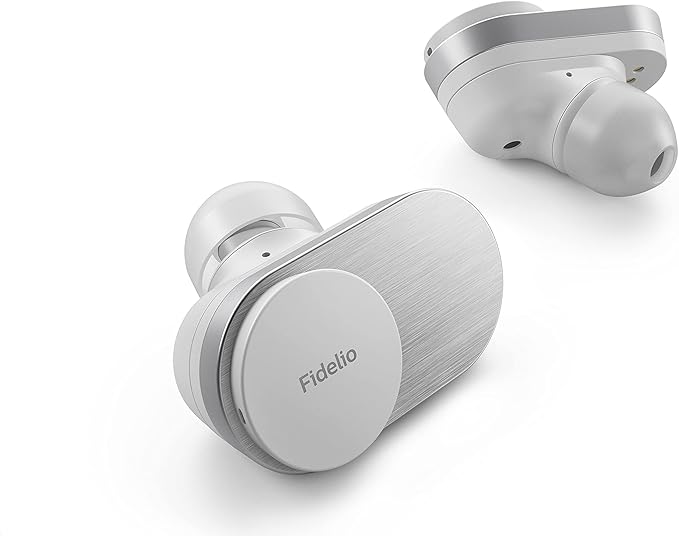
Hello and thank you for tuning in to Reviews Inside TV. Today, I’ve got something a little special to talk through. The product under the microscope is the Philips Fidelio T1 true wireless earbuds, complete with active noise cancelling Pro+, audiophile ambitions, and a premium look in white. Let’s get straight to it.
From the spec sheet, the Fidelio T1 promise a lot. They use a hybrid driver setup—a 10 mm dynamic driver handling low end, paired with a balanced armature unit for mids and highs. They support Bluetooth 5.2, and crucially, they include support for the LDAC codec, which opens the door for higher-resolution wireless audio on compatible devices. Philips claims up to 13 hours of continuous play without ANC, or 48 hours total when factoring in the charging case; with ANC enabled, they quote 9 hours in the earbuds and 35 hours via the case. The ANC system is a hybrid design together with foam-tipped ear-canal isolation. Features also include multipoint Bluetooth (connect to phone + laptop simultaneously), an app for customizing noise cancellation levels, wind-noise filtering during calls, and IPX4 water resistance. The package includes six silicone ear tips, three memory foam (Comply) tips, USB-C charging, and the charging case is trimmed with Muirhead leather and polished metal accents.
All that on paper is compelling—but what does that mean in practice? The entire point of these earbuds is to deliver immersive, high-fidelity sound while blocking out distractions, so users can enjoy music or media more purely, no matter where they are.
When I first got my hands on the Fidelio T1, I spent a bit of time setting them up and finding the right fit. Philips is generous with tip options, and I had to test several silicone and foam combinations to get a snug seal—because without that, both noise cancellation and frequency response suffer. Once the fit was dialed, setup was relatively painless. They paired quickly with my Android device via LDAC, and multipoint switching between laptop and phone worked smoothly in day-to-day use.
I tested them in several real-world scenarios. On a busy commuter train, the hybrid ANC did a respectable job suppressing low-frequency hum and midrange chatter. It wasn’t perfect—sharp noises like slamming doors or sudden announcements still popped through—but the ambient noise dropped to a level where I could comfortably keep the volume moderate. Outdoors, in wind and street noise, I found that the wind-noise filtering helped, though in gusts there was a faint hiss or flutter when switching modes.
On the audio front, I ran through a mix of genres—rock, jazz, classical, electronica—and compared how well instruments, vocals, and spatial cues came through. The bass is punchy and possesses good depth, though it leans a little forward in some tracks, causing it to dominate slightly. The mids—especially vocals—are clear and present, though occasionally there’s a touch of brightness in the upper mids that can feel a bit shouty on certain recordings. Treble extension is good, and I appreciated the detail on cymbals and strings without them sounding excessively sibilant.
In a long listening session of orchestral music, the separation and layering were quite engaging. The T1 don’t produce a massive soundstage width, but they do offer a sense of depth—so instruments feel placed behind one another rather than all on the same plane. However, with ANC on, I did detect a slight shift in tonal balance—as is common in many noise-cancelling designs—but it wasn’t severe.
I also tested call quality in quiet indoor and windy outdoor settings. Voice clarity was solid; multiple mics and filtering kept background distractions in check, and the other parties on calls reported I sounded crisp. During stronger gusts, voice intelligibility held up better than many earbuds I’ve tested—impressive.
One thing I noticed: with ANC off, the quoted battery numbers (13 h in earbuds, 35 h total) were more or less achievable. Turning ANC on, though, the real-world performance landed closer to 7–8 h in earbuds and about 30 h total. So Philips’ marketing numbers are slightly optimistic, but the battery life is still above average among true wireless options.
Let’s talk strengths and limitations.
On the plus side: the build and finish are excellent. Metal surfaces, leather trim on the case—these feel premium. The sound quality is engaging, with strong lows, clear mids, and good high-end extension, especially when fed via LDAC. The noise cancelling is effective for everyday noise, with a decent balance of suppression and transparency. Multipoint connectivity is a great convenience. Call quality holds up even in wind. Finally, the generous tip selection helps you dial in a comfortable and isolating fit.
Turning to the drawbacks: the size is a recurring complaint. Both the earbuds and the charging case are bulkier than average, making them harder to pocket or carry discreetly. Some users (and reviews) report that after 20–30 minutes the housing presses into parts of the ear, causing discomfort—especially for smaller ears. The ANC, while competent, doesn’t outperform the very best in class. Also, control input is somewhat limited: no volume control via taps, and gestures must be precise, which can be annoying mid-use. Sound leakage is noticeable at higher volumes, and the app offers only preset EQ modes, not full manual equalizer control. In terms of battery, the real-world ANC-enabled life falls short of Philips’ spec sheet. Some users (especially in published reviews) mention occasional connectivity bugs or inconsistencies with controls. Some of the cons are subjective—if you tolerate a large case or don’t need full manual EQ, they may not bother you—but prospective buyers should be aware.
So, is the Fidelio T1 good value? It depends on what you prioritize. If you want premium materials, solid sound performance with LDAC support, multipoint, and robust battery life, they justify a high price—but they are not perfect. At their typical price point, there are rivals that match or exceed in particular areas (Compactness, ANC strength, full EQ). For example, the Sony WF-1000XM4 offers excellent noise cancellation, a more compact form, and a robust app EQ experience. Or the Sennheiser Momentum True Wireless series gives a well-balanced signature, though with tradeoffs in battery or features. The Fidelio T1 stands out with its build and the hybrid driver pairing at its price, but it doesn’t dominate every dimension.
Comparing directly: the Sony WF-1000XM4 is more compact and offers arguably stronger ANC and more mature software support, though it lacks the leather-and-metal stylings of the T1. The Sennheiser Momentum models may win in tuning and comfort but often compromise in battery or connectivity features. Thus, the T1 is a strong contender where design, aesthetics, and a punchy sound signature matter more than absolute compactness or app flexibility.
Regarding longevity, Philips has a decent reputation in the audio space, but as a newer entry in true wireless, long-term reliability data is limited. The premium materials hint at durability. Memory foam tips will require care and replacement over time. Given standard wear patterns on charging cases and hinge mechanisms, regular users should expect a few years of solid life, but I can’t guarantee much beyond that.
I didn’t have to deal extensively with Philips customer support for this unit, so I can’t vouch for responsiveness first-hand. That said, Philips (and the Fidelio line) are established names, and user reports suggest their support is average to good for warranty claims and software help. No glaring red flags have emerged so far.
In summary: the Fidelio T1 deliver a compelling mix of premium materials, engaging sound, competent ANC, and lengthy usage between charges. They don’t excel in every dimension—size, full EQ control, and perfect noise cancelling are areas where they falter a bit. If you accept those trade-offs—and especially if you have a device that supports LDAC—these could be a fantastic match for your needs.
If I were to give a verdict: for someone seeking a top-tier aesthetic, robust battery, and don’t mind the bulk or limited app control, I’d recommend the Fidelio T1. If your priorities are ultra-compactness, full EQ freedom, or absolute pinnacle ANC, then you might want to compare alternatives before committing.
Thank you for watching. You’ll find the purchase link in the comments section below. If you own the Fidelio T1 already, or are considering buying, drop your questions or experiences in the comments—I read every one. Goodbye till next time, and stay tuned inside Reviews Inside TV.
Available to buy here: