

Available to buy here:
Introducing Reviews inside tv and the Total Wireless Motorola Razr 5G (2024), an eye-catching flip phone that comes bundled with a $40 unlimited talk, text, and data plan right out of the box. Let’s peel back beyond the first impression and take a smart, honest look at what this device actually brings to the table.
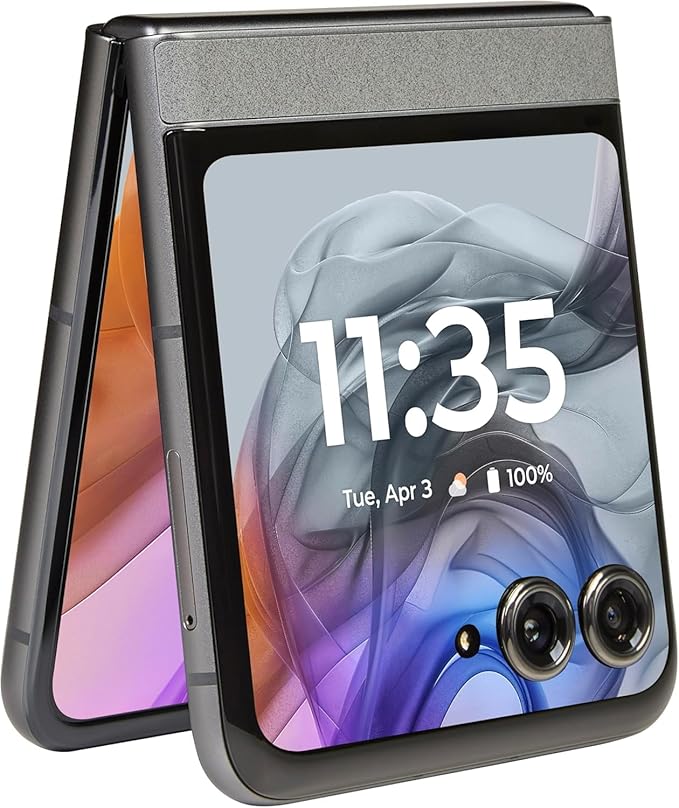
Right away, the Razr flips open to a 6.9-inch FHD+ pOLED main display with 120Hz refresh rate and a blazing 3000-nit peak brightness, while the 3.6-inch external pOLED lets you check notifications, snap pictures, and answer calls without unfolding the device—real convenience for quick tasks. Storage comes in generous 256GB, with 8GB RAM, powered by a MediaTek Dimensity 7300X processor, paired with Android 14 and Total Wireless service locked in. It promises about a day and a half of battery life from its 4,200mAh capacity, with 30W wired and 15W wireless charging capabilities. Oh, and it’s IPX8 water-resistant—rain or splash won’t send it to its death. These specs matter because they speak directly to the everyday frustrations of modern users: small screens, camera struggles in low light, sluggish performance, or running out of space—this Razr attempts to address all of that with its dual displays, folding design, and mid-range oomph.
Using it feels surprisingly intuitive. Setup was straightforward—insert the SIM, power on, and Android 14 handled the rest. The larger cover screen is a delight: I could check messages, play music, or snap selfies without unfolding—which became unusually handy on walks and quick snaps. Performance-wise, everyday multitasking felt smooth, thanks to that Dimensity 7300X and 8GB of RAM. Apps open quickly and animations feel fluid. That said, under heavier stress—like juggling navigation with music in the background—it occasionally lagged ever so slightly. The battery delivered longer sessions than I expected; in Tom’s Guide testing, it lasted over 14½ hours in their drain test, a respectable gain over last year. And when charging, getting to nearly 60% in 30 minutes made topping up on the go less painful. Still, the hinge requires a firm flick to open, reminding you that it’s a mechanical device—something to get used to.
Now, let’s talk trade-offs. On the upside, the build quality feels premium: Gorilla Glass Victus on the front, vegan leather on the back, and a strong aluminum frame. The displays are vivid and vibrant, and that external screen multiplies useability in ways that are easy to take for granted since you first use it. On the downside, the MediaTek chip can’t match the fluidity and benchmark scores of Snapdragon-powered rivals. The software update policy—just three Android OS upgrades and four years of security updates—lag behind what brands like Google offer. And yes, compared to the Razr+, image processing isn’t class-leading, especially against Pixel phones or Galaxy flagships—but for most users, it’s more than usable.
So, what does this cost? The bundled price generally runs around $700. In that range, you could pick up phones like the Pixel 7a or Galaxy S23 FE unlocked—both steady performers with longer update lifespans. But they lack the nostalgia-infused flip design and cover display that spell convenience for quick responses, selfies, or music control. Alternatively, the Razr+ (2024) brings more power, better cameras, and faster refresh, but it costs around $1,000—substantially more. If you value that flip factor, dual-display access, and solid camera flexibility, the Razr 2024 holds a unique spot.
Structurally, this device feels well engineered. The materials—Gorilla Glass Victus, surgical-grade aluminum, vegan leather—suggest lasting durability. The IPX8 rating tells us splashes are safe. There’s no long-term data yet, but users and critics haven’t flagged hinge breakage or wear-out issues yet. Still, mechanical hinges add long-term risk compared to slabs. Motorola’s reputation remains mixed: decent customer service, but hinge reliability will be something to monitor in user forums.
There’s no software updates section to unpack, since Android 14 ships here and that’s about it—no over-the-air gimmicks. But the absence of faster Wi-Fi standards like Wi-Fi 7 or Snapdragon performance does show the mid-tier price point cuts in certain areas.
By now, if you’ve been enjoying the ride with Reviews inside tv, maybe tap that like button, subscribe, and ring the bell—cause we explore the quirky builds and hidden gems of phones like this.
In summary, the Total Wireless Motorola Razr 5G (2024) blends an engaging flip design and dual-screen practicality with respectable performance and battery life for roughly $700. Its unique form factor really sets it apart and solves real pain points for quick access and selfies. Yet, it does compromise some processing punch, and the software update timeline isn’t industry-leading. It’s not perfect—but if you want style, functionality in a foldable, and convenience, this phone delivers. On the other hand, if raw performance or maximum longevity are your top priorities, unlocked alternatives may serve better.
Thanks for watching and sitting through the flip-phone magic of Reviews inside tv. You’ll find a link to snag this device down in the comments box. If you already own it, or have burning questions, drop them below—I’d love to hear your take. Good-bye till next time—and stay tuned, because at Reviews inside tv, every review unfolds a new surprise.
Available to buy here:


