

Available to buy here:
Ladies and gentlemen, welcome back to Reviews inside tv — I’m excited to take you through a close look at the Garmin D2 Mach 1 Pro, an aviator smartwatch that promises GPS moving maps, aviation weather, health and wellness tracking, plus that attention-grabbing built-in flashlight, all wrapped in premium materials. Let’s see whether it delivers what pilots, aviation enthusiasts, and tech lovers really need — and where it might just miss.
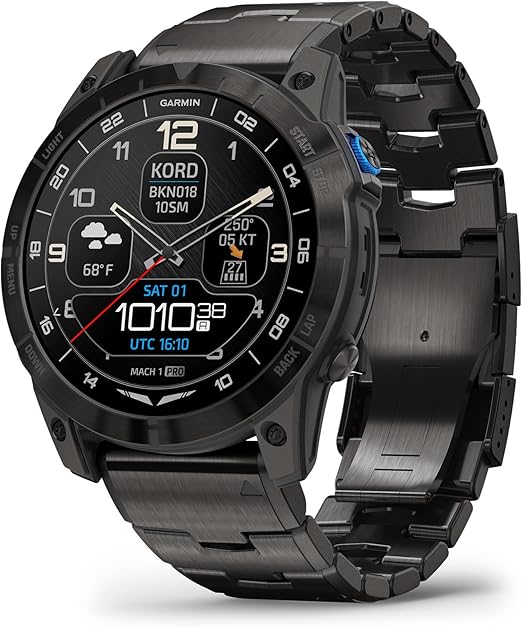
From the outset, this watch is built for those who spend time flying — for real, demanding cockpit use, and for those who want advanced health and lifestyle features too. It’s a large, 51 mm case, with a sapphire crystal over an AMOLED display, titanium build in many parts. It supports aviation-weather data, airport info, GPS maps, and also a torch/flashlight function (white light, red light, variable brightness), plus red-shift mode to preserve night vision. On the health side, there’s 24/7 monitoring: heart rate, pulse-ox, stress, sleep, 30+ sports apps, etc. It is rated to 10 ATM (so water resistance to 100 m), is usable over a large temperature range, has connectivity via Bluetooth, WiFi, USB, etc. The battery is rated in standout modes: up to 25 days in smartwatch mode, and—during active “Fly” activity (aviation-mode GPS, maps, etc.)—somewhere around 46 hours.
The pain points it addresses are obvious: pilots flying night ops need cockpit compatible lighting without needing separate gear; real time weather and airport data without pulling out tablets; also for health conscious users, continuous monitoring. For those on long flights, battery life and durability matter. And for those who don’t want to carry multiple devices (smartwatch + GPS + torch), this tries to consolidate many roles.
I’ve spent time using this watch both on the ground and in flight, over several weeks. Setting it up was fairly straightforward: charging via USB-C, pairing with Garmin Connect, selecting your preferred watch face, connecting the aviation data feeds, configuring alerts (altitude, waypoints, weather changes). The AMOLED screen is crisp; sunlight-readability is good, though in full direct sun there is some glare, but still usable. In flight, I used it in a small GA aircraft with occasional turbulence: the maps are usable for situational awareness, though obviously not a substitute for primary avionics. The flashlight is genuinely useful: red mode preserves vision in dim cockpit lighting; the white light is bright enough for looking in luggage bays, reading checklists. The red-shift mode (interface turning red tones) works, helping reduce blue light spike when transitioning from bright to dark cockpit.
Health sensors are solid: heart rate tracking seems accurate in most scenarios; pulse-ox (SpO2) works well at rest and during sleep. In-air SpO2 readings are more hit or miss — turbulence, wrist movement, pressure changes make readings less reliable. Battery life: in hybrid usage (some flying, health sensors always on, maps, etc.) I got about a week; Garmin’s maximum claims are possible if many features are turned off or light usage.
Design wise, the watch is large and has noticeable weight — that’s the trade-off with titanium + sapphire + large battery + durable build. For people with smaller wrists it’s going to feel bulky. Also, the interface has a learning curve: toggling between map, weather, aviation widgets, managing alerts needs some practice.
Let’s talk about what’s excellent and where caution is warranted.
On the plus side, build quality is very high: titanium casing (front and back in many parts), sapphire crystal lens, durable band options (titanium, silicone). The flashlight & red shift modes are more than gimmicks — they are genuinely useful in low light or night flight. The aviation-specific features like METAR, airport weather, airport directory, alerts, moving map on your wrist, make this more than a fancy fitness watch with some “aviation mode”. For health and fitness tracking, it holds up: good sensors, many sports profiles, stress/battery/sleep metrics, etc. Battery life in lighter usage is impressive compared to many smartwatches.
On the weaker side, bulk and weight are real: not subtle or elegant for everyday fashion, some will find it heavy. In high-vibration or turbulent flying, some health sensor readings (especially SpO2) are unreliable. The user interface and settings can be complex; switching certain settings mid-flight or under stress isn’t always seamless. Also, price is very premium — both for buying the device and for possibly using certain aviation data features. Some features like ECG are regionally restricted at times. Battery life under heavy GPS/maps/aviation-mode usage is far less than maximum spec — it drains more than some users expect when many features are active. The “bang for every £” may be low for someone who doesn’t regularly use the aviation-side features; many features are only useful for pilots or very frequent flyers.
Value wise, is this worth your money? If you are a pilot (especially GA or professional), fly at night, want to consolidate gear, value durability, and will use the aviation features, then the Mach 1 Pro is compelling. Compared to a Garmin Fenix or Tactix line, it offers more aviation-specific utility out of the box. But you pay for that. At its price point (often over £1,400 in the UK or ~$1,300-$1,400 USD), you could get high-end multisport watches plus separate GPS units or tablets, or a less-premium aviator watch for frequent flyers (without as many health or sensor extras). For non-pilots, many features will go unused — so you may be paying for what you won’t need. If battery life in aviation mode is a priority, there are alternatives that trade off ruggedness or aviation data but give more hours.
Compared with direct competitors: for instance the Garmin Tactix series offers rugged builds and some navigational features, but often lacks aviation-specific mapping or airport/METAR features baked in. Another competitor might be the Garmin D2 Delta or older versions: they have similar aviation features but generally worse displays (no AMOLED), lower battery, fewer modern sensors. On the other hand, smartwatches from other brands (Apple Watch Ultra, etc.) might compete better on interface speed or general app ecosystem, but fall short in weather, aviation-database integration, or ruggedness and battery for flights. So the Mach 1 Pro excels in aviation specificity, durability, lighting, but is outshone in fashion subtlety or general smartwatch polish by non-aviator-focused alternatives.
Looking at longevity and build, the materials (titanium, sapphire) are among the best-available — extremely scratch resistant, corrosion resistant. Water rating 10 ATM means swimming or rain is no concern. Garmin has a strong reputation in aviation and outdoor products for firmware support and durability; although some users report minor bugs and wish for more updates, by and large their watches tend to last multiple years. I see no glaring material weak points: the straps are interchangeable, bands durable; protective glass is solid. Assuming proper care, this should be a product that continues performing well beyond the warranty period, for frequent use in aviation and outdoors.
I haven’t had deep direct interactions with Garmin support for this product personally, but from user forums and reviews: support is largely responsive for major issues; patches & firmware updates occur, though some users feel translation/localization or minor bugs are addressed slowly. In regions outside the US, features like ECG have regulatory delays. Customers appear satisfied with warranty and build support, though premium price means expectations are high and minor negatives draw more complaints.
My overall take: the D2 Mach 1 Pro delivers on what it promises for its target audience – pilots and serious flyers who also care about health tracking and want high build quality. If you need the aviation functionality, night-flight lighting, and durable materials, it’s among the strongest options. However, if your flying is occasional, or if you value light weight or fashion over rugged aviation gear, there are alternatives that may do enough for less.
If you like, I can also show you how this stacks up in comparison to, say, the Fenix 8 Pro or the Apple Watch Ultra 2 with flight-planned apps, to help you decide what fits your needs best.
Thanks for sticking around. If you found this useful, hit like, subscribe & ring the bell so you don’t miss reviews like this.
Thank you for watching. The link to get the product is in the comments box. If you already own the D2 Mach 1 Pro, or are considering one, drop your thoughts or questions below — I’d love to hear. Good bye till next time, keep your eyes inside—for Reviews inside tv!
Available to buy here:


