

Available to buy here:
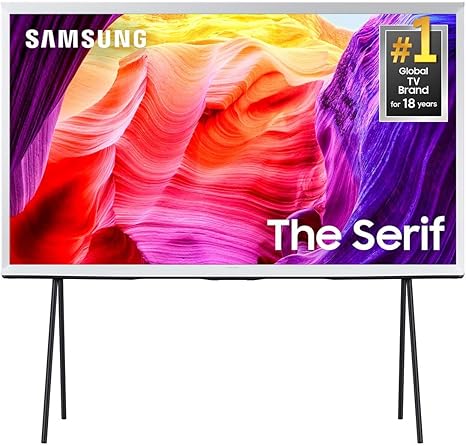
Introducing the Samsung 43‑Inch QLED 4K “The Serif” LS01D (2024), a television that doesn’t just belong on the wall — it belongs in the heart of your room. Designed by the Paris-based Bouroullec brothers, it’s not merely a screen, but a design statement: the I‑shaped frame and elegant detachable easel stand make it as much a piece of furniture as a TV.
At its core, this Serif model is a 43‑inch QLED TV delivering 4K Ultra‑HD resolution (3,840 × 2,160). It’s powered by Samsung’s Quantum Processor 4K, which drives 4K AI upscaling — so even non‑4K content is sharpened and refined. The screen is finished with a matte display, built to absorb reflections and minimize glare, which is especially helpful in bright rooms. The TV offers 100 percent colour volume thanks to Quantum Dot technology, letting it render over a billion hues vividly, and it supports HDR with adaptive HDR 10+. For motion, it relies on Motion Xcelerator, while contrast is enhanced by “Mega Contrast” combined with “Supreme UHD Dimming.” Viewing angles remain wide, making the picture consistent even if you’re not sitting head-on.
On the audio front, there’s a 4-channel speaker system producing 40 watts of output, featuring Object Tracking Sound Lite. The TV’s smart features run on Samsung’s Tizen OS, meaning you can access popular streaming apps, use the built-in voice assistants (Alexa, Bixby), and control your smart home with SmartThings. You also get Multi View, which lets you mirror your mobile device or display two sources at once — great for multitasking or keeping up with live content. The Serif also supports Tap View for quick mobile mirroring and Ambient Mode+, turning the blank screen into a canvas for art or your own photos when not in use.
In real‑world use, setting up the Serif is pretty straightforward — the detachable easel stand is simple to install, and it makes it feel more like a piece of decorative furniture than a traditional TV. When I powered it on, the first thing I noticed was how the matte screen dampened glare: even with a bright window behind me, I didn’t see distracting reflections. The Quantum Processor upscaler does a solid job; I put on some older HD shows, and the sharpening was subtle but effective — much better than typical upscaling without feeling artificial.
I tested the TV across a variety of use cases: streaming, gaming, and even using it as a secondary monitor. During gaming, the response was good enough for casual play, though the native refresh rate is only 50 Hz, so it’s not a pro‑level gaming monitor. Watching movies in HDR gave punchy colour and good depth, though it doesn’t have local dimming, so blacks aren’t quite as deep as higher‑end TVs. Also, the speakers are decent: clear dialogue, but for more cinematic immersion, a soundbar would definitely step things up. In terms of multitasking, using Multi View to mirror my phone while watching a game made for a surprisingly useful second-screen experience.
This TV has a number of real strengths. The design is probably its biggest selling point: it’s stylish, modern, and works beautifully in rooms where you want a freestanding art-like piece. The matte finish isn’t just for looks — it genuinely cuts down on glare in bright environments. Colour reproduction is excellent thanks to the Quantum Dots, and the upscaling feels refined. It’s also quite well integrated with smart-home systems through SmartThings, and the voice assistant support adds convenience.
On the flip side, there are trade‑offs. The 50 Hz panel means motion won’t feel as fluid as higher-refresh displays, especially for fast-paced gaming. The audio, while fine, isn’t going to wow home cinema purists. And while the easel stand is a design highlight, moving the TV around can be a little cumbersome given its shape and weight. There’s also potential durability concerns — some users have reported issues with the frame in larger Serif models, though that’s less of a concern in the 43‑inch edition.
When it comes to value for money, the Serif sits in a interesting place. It’s more expensive than many standard 43-inch 4K TVs, largely because you’re paying for the design as much as the screen. But for someone who values aesthetic integration into their living space, it could be worth the premium. If pure performance — in terms of refresh rate or black levels — is your top priority, there are gaming-optimized or higher-dimming TVs in similar sizes. That said, few of those will look as distinctive in your room as the Serif.
In comparison, you might look at other lifestyle TVs like Samsung The Frame 43″ QLED, which also blends design and function. The Frame offers interchangeable bezels and a similar art-mode concept, but it has a glossier screen, which can mean more glare. On the performance side, more conventional 43” 4K TVs from brands like TCL or Hisense might outpace the Serif in specs like refresh rate or brightness — but they lack the Serif’s sculptural form.
Build-wise, the Serif feels solid. The Bouroullec-designed I-shape frame is well constructed, and the detachable metal easel stand feels sturdy when attached. Because this is the 2024 LS01D model, long-term reliability data is still emerging, but Samsung has a solid reputation, and the materials used don’t feel cheap. That said, as noted in some user accounts, design-forward TVs like this may need careful placement to avoid knocks or stress on the frame.
In terms of customer support, I didn’t have a need to make a claim, but Samsung’s warranty for this model is typically standard — and the brand’s support network is quite mature. For users who do need help, access to service centres and replacements should be relatively smooth.
All in all, this Serif delivers on its promise: it’s not just a TV but a piece of design-forward decor. Its picture quality is strong, especially for everyday viewing, and its matte screen makes it standout in bright rooms. It’s not for hardcore gamers or those needing ultra-high refresh rates, but for someone who prioritizes design, aesthetics, and a unique presence in the home, it’s a compelling choice.
If you’re after a TV that doubles as a decorative piece — something graceful, functional, and visually arresting — this Serif is definitely worth considering. For purely spec-driven needs, there might be better value elsewhere, but the Serif’s design is where it truly shines.
Thanks for sticking with me through this review. If you’re curious about where to grab one, check the comments below — there’ll be a link there. And if you already own the Serif, or you’re thinking about it, drop your thoughts or questions below — I’d love to hear what you make of it. Good bye till next time — and here’s to catching more stylish tech on Reviews inside tv.
Available to buy here:


