

Available to buy here:
Welcome back to Reviews Inside TV, where we break down the gear that actually matters, piece by piece, sound by sound. Today’s focus—something that promises silence in chaos and rhythm in motion—the Soundcore by Anker Space A40 Adaptive Active Noise Cancelling Wireless Earbuds. These earbuds claim up to 98% noise reduction, a 50-hour playtime, and Hi-Res Audio support through LDAC. That’s a big promise for something that fits in your pocket, but do they truly deliver? Let’s find out.
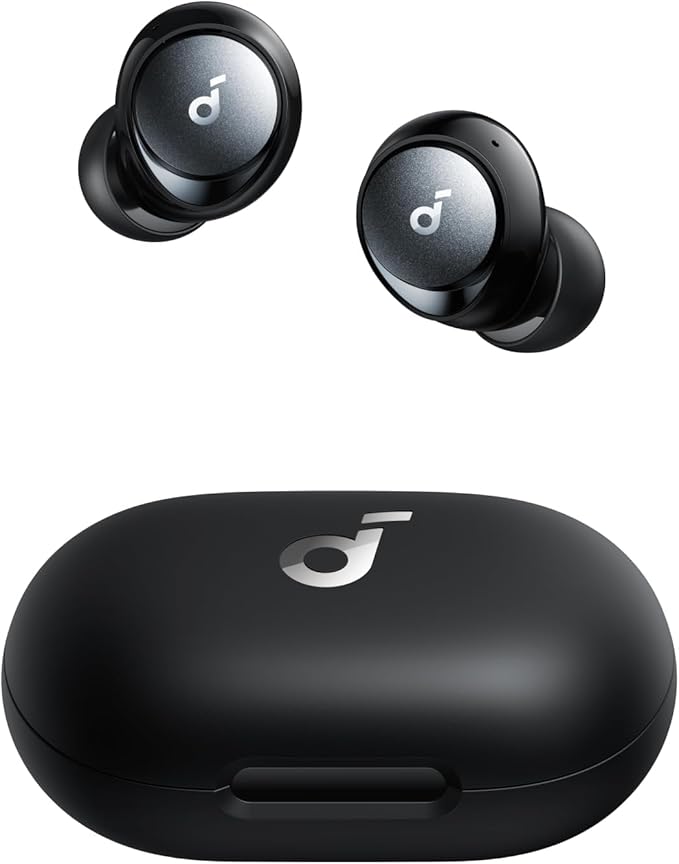
Starting with the essentials, the Space A40 is designed for travelers, commuters, and anyone who just wants peace in a noisy world. They use adaptive active noise cancellation that automatically adjusts based on your surroundings—think café chatter, subway rumble, or airplane engines—and fine-tunes the cancellation in real time. Anker claims up to 98% of noise reduction, which, if true, puts them near the top tier of consumer-grade ANC performance. You get 10 hours of playtime per charge, and a staggering 50 hours total with the case. A quick 10-minute top-up nets 4 hours of use, so even if you forget to charge overnight, you’re still covered. The sound is driven by double-layer diaphragm drivers designed to separate bass, mids, and treble with impressive precision. And thanks to LDAC support, if you’re using an Android device, you’ll get Hi-Res Audio wireless streaming with three times more detail than standard Bluetooth codecs. Comfort-wise, these earbuds are notably compact—smaller and lighter than previous Soundcore ANC models—and their ergonomic profile aims to disappear once you put them on.
So, what’s it actually like using them day to day? Setting them up is quick—pairing happens almost instantly once you open the case, and the Soundcore app offers a smooth onboarding process. I tested them in several real-world environments: a busy café, a crowded train, and even during a flight. The adaptive noise cancellation handled each scenario differently, automatically adjusting the intensity. In a café, it filtered out background chatter while keeping speech nearby audible. On the train, it dulled the low-frequency hum effectively, and in-flight, it came surprisingly close to premium competitors like Sony’s WF-1000XM5 in canceling the cabin drone. The transparency mode was natural too—it doesn’t feel artificial or hollow. Sound quality is rich and layered; the bass is deep but not overpowering, the mids carry warmth, and the treble has sparkle without harshness. LDAC mode noticeably widens the soundstage, though it does use more battery. As for calls, the mics perform well in quiet or moderate environments, but in strong wind or city noise, some background seeped through.
Now, let’s talk comfort and usability. These are among the lightest ANC earbuds around, barely noticeable after a few minutes. The rounded housing and snug fit create a proper seal without pressure, which helps both comfort and passive noise isolation. Touch controls are responsive, though they take a bit of getting used to, and everything—from ANC strength to EQ customization—can be adjusted through the Soundcore app.
By the way, if you’re enjoying this review so far, don’t forget to hit that like button, subscribe to Reviews Inside TV, and tap the bell icon so you don’t miss the next deep-dive review. Trust me, you’ll want to stay tuned for what’s coming.
Now, onto the strengths and weaknesses. The biggest advantage is how versatile the noise cancellation feels. It adapts intuitively without needing constant manual tweaks. Battery life is another win—50 hours total with the case is far beyond what most competitors offer. Sound quality, especially with LDAC enabled, is detailed and dynamic for this price point. Comfort and portability are also standout factors; you can wear these for hours without fatigue. On the downside, the call quality, while decent, isn’t flawless under challenging outdoor conditions. LDAC mode drains battery faster and can sometimes cause brief connection drops in crowded wireless environments. And while the Soundcore app offers rich customization, beginners might find it a bit overwhelming at first. Still, these downsides feel relatively minor compared to the overall performance package.
As for value, the Space A40 sits in the midrange category, often retailing around $100. In that bracket, it’s competing with earbuds like the Samsung Galaxy Buds FE and JBL Live Free 2. The Anker Space A40 outlasts both in battery life and arguably offers more flexible ANC adjustment. The LDAC support and multipoint connection (which allows you to connect to two devices at once) add real-world convenience you won’t always get at this price. So, while there are cheaper ANC earbuds out there, few balance comfort, sound quality, and endurance quite this well.
Comparing directly to the Sony WF-C700N, Sony’s noise cancellation still edges ahead in overall refinement, but the Space A40 offers far better endurance and nearly equivalent sound detail for much less money. Compared to the Bose QuietComfort Earbuds II, it’s not as plush or as premium in tuning, but it’s also less than half the cost. That’s where the Space A40 really earns its reputation—it’s not trying to replace the flagship giants, it’s undercutting them with smart engineering and balanced design.
The build quality is another area where Anker impresses. The matte finish on both earbuds and the case resists fingerprints, the lid has a solid magnetic snap, and the earbuds themselves feel sturdy despite their feather-light weight. While they’re mostly made of plastic, the assembly feels tight and refined. Based on user feedback and the brand’s track record, long-term reliability for Anker earbuds tends to be strong, with few widespread issues reported even after months of use. IPX4 water resistance also gives some protection against splashes or sweat, which makes them suitable for light workouts.
When it comes to customer support, Anker’s reputation is generally positive. Their response times are quick, and replacements are typically handled without much friction if a genuine fault is verified. The inclusion of an 18-month warranty in many regions adds an extra layer of reassurance, especially compared to budget competitors that often offer only 12 months.
In the end, the Soundcore by Anker Space A40 manages to strike a rare balance. It’s compact, smart, and delivers more than you expect for the price. The adaptive ANC is genuinely effective, the sound signature caters to most listeners, and that 50-hour total playtime makes them perfect for travelers or anyone tired of constant recharging. They’re not flawless—the mic performance could be sharper, and LDAC mode can be finicky—but for most people, these are minor trade-offs in an otherwise polished experience. If you want premium-level performance without paying premium prices, the Space A40 is a strong contender that comfortably punches above its weight.
Thanks for watching Reviews Inside TV. The link to get your own pair is in the comments box below. Drop your questions or share your experience if you’ve already tried them—I’d love to hear how they performed for you. Until next time, this is Reviews Inside TV signing off—because sometimes, silence really is golden.
Available to buy here:


