

Available to buy here:
Only
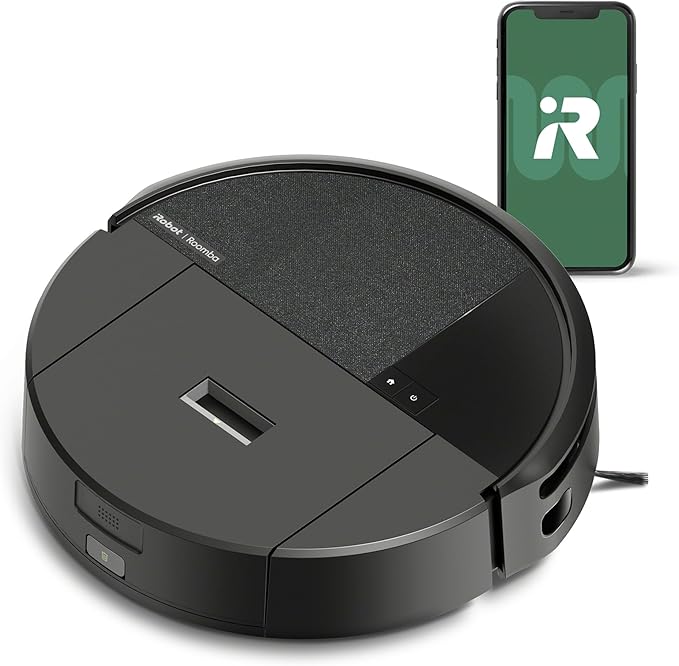
Thanks for watching Reviews inside tv today. I’ve got something unusual to share—a robot vacuum that squashes the dirt within itself. The iRobot Roomba 205 DustCompactor has been on my radar, and I couldn’t wait to give it a proper once-over.
The Roomba 205 DustCompactor is a self-contained robot vacuum that compacts debris internally for up to 60 days, doing away with those bulky self-emptying stations and bags. It boasts 70× the power-lifting suction of the old Roomba 600 series, combines a multi-surface rubber brush plus an edge-sweeping brush, and uses ClearView LiDAR to map your home—even in the dark. You can choose among four suction levels, schedule or target specific rooms via the Roomba Home app, and control it with Alexa, Siri, or Google Assistant. The battery lasts over three hours and the robot automatically recharges and resumes cleaning when needed.
Using one felt approachable enough—set-up through the app was smooth, and mapping happened fast. In a typical clean of my hallway and living room (hard floors plus a rug), it navigated neatly—but I did notice it bumped things more than I’d expect, almost like it was too eager. Edge debris was swept up well, and the compactor never ran out of room—for a week or more into testing. That said, emptying the internal bin wasn’t fun; dust scattered easily, so it still demands some care. The basic mop feature worked okay for light spills on hard floors, but let the mop pad on near rugs and it’d either avoid the area or drag damp fabric across stubborn carpet, which isn’t great.
I’ll just say this like I’m chatting with a friend: if you want a Roomba that saves space and cuts out the dock drama, you’ll love how compact and docking-dock-free it is. But if you’re big on spotless carpet edges, silent performance, or advanced mopping, this could leave you wanting a bit more.
Good side: build quality feels decent—solid plastic that hasn’t worn, and iRobot’s LiDAR navigation is a smart step up from its older camera-based models. No long-term reliability data yet, but iRobot’s usually in the trusted camp—though I did notice the tiny dock shifts if not snug against a wall.
Shift over to value: at around $449 MSRP (often found nearer $295–$330), you’re paying for the convenience of onboard dust compacting. Competitors like the Roborock Q5 Pro+ or Dreame D9 Max Gen 2 offer stronger navigation, better obstacle handling, or smoother app interfaces at similar or lower prices. If you prize less emptying and minimal floor clutter, this still makes sense—just be aware of what you’re trading off.
Now, comparing directly: the Roborock Q5 Pro+ gives you won’t-get-stuck reliability, mop–vac combo options, and better app polish. Dreame D9 Max Gen 2 manages reliable LiDAR plus stronger suction and pet-hair handling for around the same price. The Roomba 205 stands out only if dock-free compact convenience is your top requirement.
So here’s the bottom line: this robot delivers what it promises—no dock, multi-level suction, LiDAR mapping, and internal compaction. Strengths? Space-saving design, decent suction, and less frequent emptying. Weaknesses? Messy emptying, basic mopping, and occasionally clumsy navigation and app experience.
If you just want a no-fuss vacuum that handles dust well and you don’t mind some hands-on upkeep, the Roomba 205 DustCompactor is decent. But if slicker navigation, better mopping, or app polish matter to you, there are better options out there for the same cash.
Let me know if you’ve tried it—or if you’d like me to demo any of those other models. Until next time… goodbye till next time from your insiders at Reviews inside tv—keep your floors cleaner, your gadgets smarter, and your docking drama minimal!
Available to buy here:


