

Available to buy here:
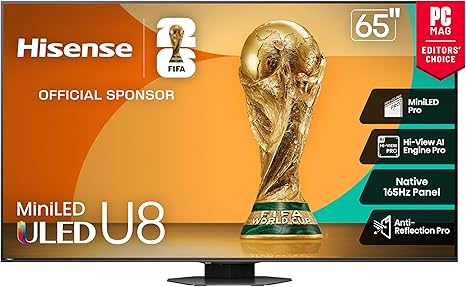
Welcome to Reviews Inside TV, where we bring you in-depth insights into the latest and greatest products! Today, we’re taking a close look at the Hisense 65″ Class U8 Mini-LED ULED 4K UHD Google Smart TV (65U8QG, 2025 Model). Packed with cutting-edge features, this TV promises a highly immersive viewing and gaming experience with its state-of-the-art technology. But does it live up to the hype? Let’s find out.
This Hisense TV boasts an impressive array of features. With a 65-inch screen, it uses Mini-LED backlighting, offering a peak brightness of up to 5000 nits and up to 5600 local dimming zones. This combination allows for incredibly precise lighting control, resulting in deeper blacks and brighter highlights. For those of you who appreciate vivid, true-to-life visuals, this means a dramatic reduction in halo effects around bright objects. The TV is also powered by the Hi-View AI Engine Pro, a proprietary chipset that optimizes the picture and sound based on what you’re watching. Whether it’s a movie, game, or sports event, this TV adjusts in real time to deliver the most realistic experience possible.
For gamers, the Hisense U8 really steps up the game with its native 165Hz refresh rate panel and Variable Refresh Rate, ranging from 48Hz to 165Hz. With support for AMD FreeSync Premium Pro, Auto Low Latency Mode, and Low Latency MEMC, you’ll experience smooth, tear-free gameplay. And if you’re a competitive gamer, the TV’s Game Bar gives you on-screen performance metrics and game settings, so you can stay ahead of the competition. To top it off, Anti-Reflection Pro minimizes glare, ensuring your gameplay remains uninterrupted no matter the lighting in the room.
In terms of sound, this TV doesn’t fall short. The 4.1.2 channel sound system comes equipped with Dolby Atmos, providing a fully immersive audio experience. Whether you’re hearing the crowd roar or a subtle soundtrack, the built-in subwoofer and up-firing speakers create a rich, dynamic soundstage that puts you right in the middle of the action. With IMAX Enhanced certification, the TV brings cinema-quality audio and visuals to your living room.
Now, let’s get into the real-world performance of the Hisense U8. Setting it up was a breeze. The Google Smart TV interface is easy to navigate, and with built-in Google Assistant, you can control the TV with your voice, whether it’s adjusting settings or finding your favorite shows. I tested the TV with a variety of content, from movies to video games, and the picture quality was nothing short of stunning. The 4K UHD resolution and HDR support made every frame pop with rich, vibrant colors, especially when paired with the QLED technology that produces over a billion shades of color.
When it comes to gaming, the high refresh rate panel really shines. I played a few fast-paced games, and the native 165Hz refresh rate paired with FreeSync Premium Pro delivered smooth, fluid gameplay with no noticeable screen tearing or stutter. The Game Bar was a nice touch, letting me adjust settings on the fly without interrupting gameplay, and the low latency made a significant difference, especially during intense moments in competitive games.
The sound performance is equally impressive. The Dolby Atmos system provides immersive, multidimensional audio, making it feel as though you’re surrounded by sound. The built-in subwoofer ensures deep bass, while the up-firing speakers give you a sense of height and space, which is a huge plus for watching action-packed scenes or listening to detailed soundtracks. While not a full-fledged surround sound system, it’s certainly a step above what you typically get from built-in TV speakers.
One of the things I really appreciated was the Anti-Reflection Pro technology. No matter the time of day, I never had to worry about glare from sunlight or room lights washing out the image. Even during the day, the picture remained clear and vibrant, which is a huge advantage for daytime viewing.
Now, let’s talk about the pros and cons. On the plus side, the picture quality is phenomenal. The Mini-LED backlighting, combined with the 5000-nit peak brightness and 5600 local dimming zones, creates a stunning, lifelike image. The Hi-View AI Engine Pro works wonders, adjusting picture and sound to match the content in real time, which is a fantastic feature for both movie lovers and gamers. The sound quality is also a strong point, with Dolby Atmos providing an immersive audio experience that really complements the visuals.
However, there are a few areas where it could be improved. The interface, while easy to use, can sometimes be a little sluggish, especially when navigating through apps or switching between content sources. Additionally, while the sound is great, it doesn’t replace a full surround sound system, so if you’re looking for that high-end home theater experience, you might still need external speakers. Lastly, while the TV does a great job of minimizing glare, it still can’t completely eliminate reflections in very bright rooms with direct light sources.
In terms of value for money, the Hisense U8 is a solid contender in the 65-inch TV market. Priced competitively, it offers a lot of premium features that you’d expect to find in higher-end models. The combination of Mini-LED, QLED color, Dolby Atmos sound, and gaming-specific features makes it a well-rounded option for those who want a TV that excels in both entertainment and gaming. Compared to other models in this price range, like Samsung’s QLED TVs or LG’s OLED options, the Hisense U8 holds its own with its impressive brightness and excellent color accuracy, although it might not reach the deep blacks of an OLED screen.
When comparing this TV to its competitors, the Hisense U8 shines with its value proposition. For a similar price, you might find other 65-inch models that offer great visuals, but few match the combination of the advanced picture technology, sound system, and gaming features. For instance, while OLED TVs generally offer superior contrast and deeper blacks, the U8’s Mini-LED technology provides higher peak brightness and better performance in bright rooms, making it a strong choice for those who prioritize versatility in varying lighting conditions.
In terms of build quality, the Hisense U8 feels solid and well-constructed. The materials used are premium, and the overall design is sleek and modern, fitting in nicely with any living room setup. Given the reliability of the Hisense brand, I expect the TV to hold up well over time, though long-term testing is still limited since this is a relatively new model. However, based on Hisense’s reputation for solid build quality, I’d expect the TV to remain a durable option for several years.
Customer support is something that’s often overlooked, but it’s important. While I haven’t personally needed to reach out to Hisense’s customer service for this product, the brand is known for providing solid support. They offer various channels for assistance, including online support and phone lines, and from what I’ve seen, response times are fairly quick.
Finally, let’s wrap things up. The Hisense 65″ U8 Mini-LED ULED TV is an impressive TV that delivers on all fronts, from stunning picture quality to immersive sound and advanced gaming features. It’s a well-rounded option for anyone looking to upgrade their home entertainment setup. While there are a few areas for improvement, such as the interface speed and sound system, it offers great value for money, especially for those who want top-notch picture performance without breaking the bank. If you’re in the market for a high-performance TV that delivers excellent brightness, vibrant colors, and smooth gaming, this is a great choice.
Thanks for watching! If you found this review helpful, don’t forget to like, subscribe, and hit the bell icon so you don’t miss any of our future reviews. If you’re already using the Hisense U8, feel free to share your experience in the comments below. For more details, the product link is in the comments box. Until next time, keep it tuned to Reviews Inside TV—where the best in tech comes to life.
Available to buy here:


