

Available to buy here:
Welcome back to “Reviews inside tv.” If you’ve been looking for a way to make your meals healthier without sacrificing flavor, this next product might just be what you need. Today, we’re talking about the Philips 2000 Series Airfryer with RapidAir Technology. This sleek kitchen gadget promises crispy results with minimal oil, boasting 13 different ways to cook your meals. Let’s take a closer look at what this appliance brings to the table and whether it’s worth adding to your kitchen.
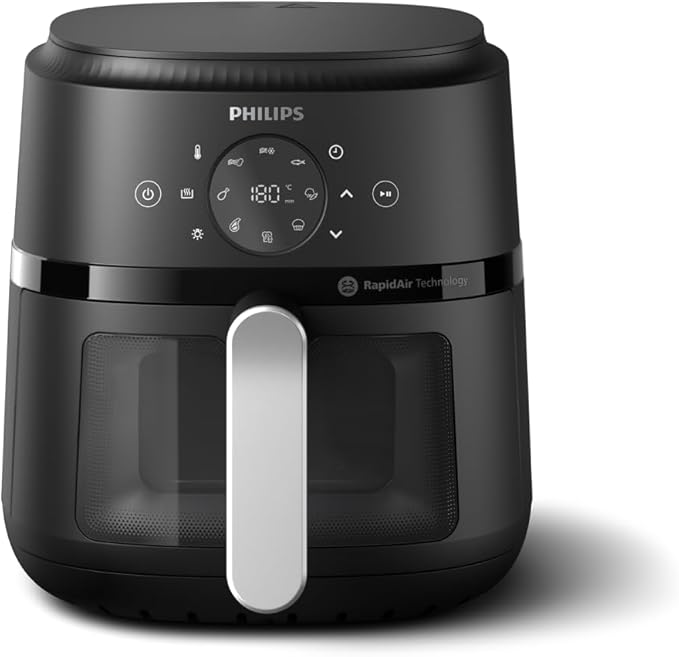
The Philips 2000 Series Airfryer, model NA221/00, offers a 4.4-quart capacity—ideal for family-sized portions. It can handle up to six chicken drumsticks or nearly a pound of fries, making it a solid choice for a busy household. But what truly sets this air fryer apart is its RapidAir Technology. This unique Starfish design circulates hot air around your food, ensuring it comes out crispy and golden, even with little to no oil. The key selling point here is that you can achieve healthier meals with up to 90% less fat. That’s a major benefit for those looking to enjoy fried foods guilt-free.
This Airfryer isn’t just for frying, though. Philips has designed it with versatility in mind. It boasts 13 different cooking presets, allowing you to air fry, bake, roast, grill, reheat, defrost, keep warm, stir-fry, sauté, and even toast. With these one-touch presets, it’s clear that Philips aims to cater to nearly every type of cooking need you might have in the kitchen. Whether you’re cooking frozen food, prepping a stir-fry, or simply reheating leftovers, this appliance does it all. And with the included HomeID app, you can access more recipes, making it even more user-friendly.
When I first started using this Airfryer, I was impressed with how easy it was to set up. The touchscreen control panel is intuitive, and the one-touch presets make choosing the right cooking mode a breeze. Whether I was air frying fries or baking chicken, the results were consistent, and the food was cooked through evenly. The Starfish design definitely plays a big part in that, helping to circulate heat more effectively than traditional air fryers. The ability to use less oil without compromising on texture is a win in my book, especially for those who are health-conscious but still crave that crispy exterior.
Of course, no product is without its flaws. One thing I noticed during testing is that while the air fryer does cook food evenly, the cooking times can vary depending on the type of food and how much you’re making. For example, frozen chicken wings may take longer than the preset suggests, so you may need to adjust the time based on your specific batch. Additionally, while the 4.4 QT capacity is perfect for a family meal, it might not be large enough if you’re cooking for a group of more than four people. Larger families might find themselves cooking in batches.
The cleaning process is another highlight here. The Philips 2000 Series Airfryer features a non-stick StarPlate and dishwasher-safe parts, which means you can easily clean it up after cooking. I tested it by throwing the parts into the dishwasher, and they came out looking brand new—no hassle at all. This is a major time-saver, especially when you’re using the appliance daily. The fact that the StarPlate is non-stick also means there’s less scrubbing involved if you prefer handwashing.
When it comes to value for money, the Philips 2000 Series is certainly in the mid-range price category for air fryers. It’s not the cheapest model on the market, but it does offer a lot of versatility and health benefits that many other air fryers don’t. For instance, brands like Ninja and Cosori offer similarly priced models, but they don’t always come with as many presets or the same level of build quality. So, while you’re paying a bit more, you’re getting something that can handle a wide range of cooking tasks.
Comparing it to the Ninja AF101 Air Fryer, which is another popular choice, the Philips model stands out due to its 13-in-1 cooking options. The Ninja offers fewer presets and doesn’t have the same app integration. While the Ninja does a great job with air frying, the Philips gives you more flexibility in the kitchen, making it a better fit for those who want more than just the basics.
Looking at the build quality, the Philips 2000 Series is solidly constructed. The plastic exterior feels sturdy, and the controls are responsive, making it a reliable choice for everyday use. As for longevity, it’s hard to speak to long-term durability just yet, but Philips is known for making durable products that hold up over time, so I’d expect this air fryer to last if it’s well taken care of. There are no widespread reports of durability issues either, which bodes well for its long-term performance.
As for customer support, I didn’t personally need to contact Philips during my testing. However, they have a generally positive reputation for customer service, with quick response times and helpful support staff. If you run into any issues, you can expect decent assistance from the company.
To wrap things up, the Philips 2000 Series Airfryer brings a lot of promise to the table. It’s versatile, easy to use, and delivers healthier meals without compromising on taste. The 13-in-1 functionality is a game-changer for those who want an all-in-one kitchen appliance, and the easy-to-clean design is a nice bonus. However, the slightly smaller capacity and the potential for varying cook times depending on the food may be a dealbreaker for larger families or those who prefer absolute consistency with cooking times.
In terms of value, it sits in the mid-range for air fryers, but it offers great versatility, which could make it worth the price. Whether you’re looking for healthier meal options or just want a more efficient way to cook, the Philips 2000 Series Airfryer is definitely worth considering. Thanks for watching, and if you’ve already tried this air fryer or have any questions, drop them in the comments below. Until next time, keep enjoying your meals with “Reviews inside tv.”
Available to buy here:


