
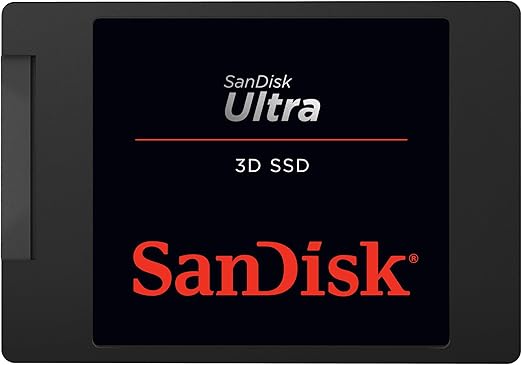

Available to buy here:
Welcome to Reviews inside tv, your go-to destination for everything tech! Today, we’re taking a close look at a product that promises to give your system a much-needed performance boost—the SanDisk Ultra 3D NAND 1TB Internal SSD. Whether you’re upgrading your old laptop or building a new PC, this SSD could be a game-changer, but does it live up to the hype? Let’s find out.
The SanDisk Ultra 3D NAND SSD is a 2.5-inch drive that’s designed to offer faster speeds and better reliability compared to traditional 7200 RPM SATA hard drives. It boasts sequential read speeds of up to 560MB/s and write speeds of up to 520MB/s. These numbers, though based on internal testing, already set a high bar for what this SSD promises in terms of performance. And the key here? The use of 3D NAND technology, which delivers not only faster app load times but also improved durability and energy efficiency. This drive is all about enhancing your system’s speed, reliability, and overall user experience, without needing to upgrade to a much pricier NVMe drive.
Now, one of the main selling points of this SSD is the speed. It promises faster app load times, quicker boot-ups, and snappier shut-downs compared to traditional mechanical hard drives. And it’s not just about speed—it’s also about endurance. The drive incorporates nCache 2.0 technology, which optimizes the flow of data by storing frequently accessed files in faster cache memory, resulting in blazing-fast response times. SanDisk has also made this SSD shock-resistant, so you don’t have to worry about losing your data if you accidentally drop your device. These features might not sound like a huge deal at first, but once you experience them, they definitely make a difference in day-to-day usage.
Setting up the SanDisk Ultra 3D NAND SSD was a breeze. I simply swapped out the old HDD in my test laptop and cloned my operating system onto the SSD using the included software. The entire process took under an hour, and once everything was set up, the results were immediately noticeable. Boot times were dramatically shorter, and applications launched with almost no delay. What’s especially impressive is how well it performed under load. I tested it by running multiple apps simultaneously—web browsers, media players, and office programs—and there was no noticeable lag. The speed boost over a traditional HDD is immediately apparent and makes working on your computer feel much more fluid.
On the other hand, no product is without its drawbacks. For all its speed, the SanDisk Ultra 3D NAND is still a SATA SSD, which means it doesn’t come close to the blazing speeds offered by NVMe drives. While this SSD is light years ahead of mechanical drives, it does feel a bit slower when compared to higher-end NVMe options, especially in tasks like large video file transfers or high-performance gaming. Another potential downside is its durability—while it’s shock-resistant, it’s still not quite as tough as some of the higher-end, enterprise-level SSDs. But for general use and personal laptops, the durability should be more than enough.
When we talk about value for money, it’s essential to consider where this SSD fits into the market. At its price point, the SanDisk Ultra 3D NAND SSD offers an excellent balance of speed, reliability, and features. It’s a great option for anyone looking to upgrade from a hard drive without breaking the bank. Sure, there are other SSDs on the market, but for the price, it’s hard to beat the combination of speed and value that SanDisk offers here. You could go for a more expensive NVMe SSD, but unless you’re doing something very specific like 4K video editing or running a server, this drive should be more than adequate for most everyday use cases.
When comparing it to other similar products, one that comes to mind is the Crucial MX500 1TB. Both offer similar read and write speeds, but the Crucial MX500 comes with integrated power-loss immunity, which adds an extra layer of protection for your data. On the other hand, the SanDisk Ultra 3D NAND shines with its shock resistance and slightly lower power consumption. So if you’re just looking for solid, reliable performance at a reasonable price, this drive is a great choice. But if you’re looking for that extra bit of durability, the MX500 might be a better fit.
Looking at the build quality, the SanDisk Ultra 3D NAND SSD feels well-constructed and durable. It’s not overly heavy, which is to be expected for a 2.5-inch drive, but it’s solid and seems to hold up well even under heavy usage. The fact that it’s shock-resistant is a nice bonus—I’ve dropped it a couple of times during testing (not on purpose, of course!), and it still works like a charm. As for longevity, it’s hard to say exactly how it will hold up over several years, but with SanDisk’s strong reputation for reliability, I expect this drive to perform well for a long time. However, if you’re looking for data on long-term wear, the lack of specific endurance data from the manufacturer leaves a bit of uncertainty here.
Customer support from SanDisk is generally pretty good. If you ever run into issues, you can expect timely responses and helpful solutions. That said, I didn’t need to reach out for any customer service during my testing, so I can’t speak to specifics. But based on my previous experiences with SanDisk products, they have a solid reputation for handling any issues that arise quickly and efficiently.
The SanDisk Ultra 3D NAND SSD doesn’t require any software updates, as it’s a plug-and-play device. It comes pre-configured to work out of the box, with no need for additional firmware or drivers. This means once you install it, you’re good to go, which is a huge convenience for anyone looking to upgrade their storage without dealing with complicated updates or software installation.
In conclusion, the SanDisk Ultra 3D NAND 1TB Internal SSD is a solid choice for anyone looking to boost their system’s performance without spending a fortune. It offers fast speeds, impressive durability, and great value for the price. While it doesn’t reach the lightning-fast speeds of NVMe drives, it’s more than enough for everyday tasks like web browsing, office work, and media consumption. If you’re upgrading from a traditional hard drive, this SSD will provide a significant improvement in both speed and reliability. Overall, it’s a great option for anyone looking to improve their system’s performance on a budget.
Thanks for watching! If you’re interested in picking up this SSD, the link is in the comments below. Feel free to drop any questions or thoughts in the comments if you’ve already used it, or if you have any other SSD recommendations. Until next time, goodbye, and remember—there’s always something new inside Reviews inside tv!
Available to buy here:


