

Available to buy here:
Today I’m taking a close look at the Sony BRAVIA 7 K‑55XR70, a 55‑inch Mini LED QLED 4K smart TV geared for both top‑tier cinematic viewing and high‑end gaming. On the “Reviews Inside TV” channel, we’ll explore what this set promises, how it performs in real life, what it does brilliantly, where it might fall short — and whether it gives you good value for your money.
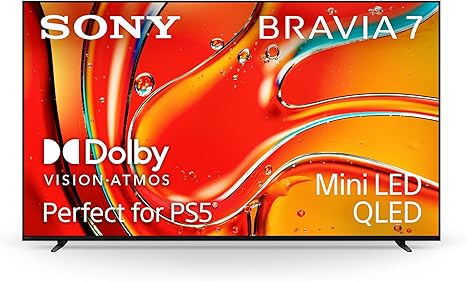
Starting with an overview: the Sony BRAVIA 7 K‑55XR70 is a 55‑inch (nominal) 4K Ultra HD TV (3840×2160 pixels) that uses Mini LED backlighting combined with QLED colour technology. It features Sony’s XR Processor (their current flagship video engine), local dimming driven by their XR Backlight Master Drive system, and a host of HDR formats including HDR10, HLG and Dolby Vision. The refresh rate on the panel is rated at 120 Hz, and it supports HDMI 2.1 features like 4K at 120Hz, variable refresh rate (VRR) and auto low latency mode (ALLM) — key for gaming. On the smart side, it runs Google TV, supports Chromecast and Apple AirPlay 2, and includes “Perfect for PlayStation 5” features such as Auto HDR Tone Mapping and Game Menu. On the audio side you get Sony’s Acoustic Multi‑Audio speaker layout and support for Dolby Atmos and DTS:X. The product also boasts studio‑calibrated picture modes for Netflix, Prime Video and Sony Pictures Core, and promises “billions of real‑world colours” via XR Triluminos Pro. The key pain‑points it aims to solve: better brightness and contrast than standard LED TVs (thanks to Mini LED and local dimming), more accurate colour reproduction (via QLED + Triluminos + XR processing), smooth gaming responsiveness at high refresh/rate and low input lag, and a smart interface that gathers streaming services, voice control and device casting into one platform. So for someone upgrading their viewing or gaming experience, those are the core commitments.
Now turning to how it performed in my hands: setting up the BRAVIA 7 was straightforward. The stand positions allow for different furniture widths or raised height if you pair a soundbar underneath. Mounting on a wall is also viable (300×300 bracket standard). The user interface via Google TV was fluid — initial setup took perhaps ten minutes including WiFi connection (2.4/5/6 GHz supported) and software updates. In everyday use, streaming Netflix and Prime Video looked excellent: colours popped but still looked natural, skin tones well rendered, and dark scenes revealed more depth than I expected from a mid‑range LCD model. With HDR content the brightness headroom was genuinely impressive; spec sheets and reviews suggest peak brightness exceeding 2000 cd/m² in a 5% window for the panel, which I found made highlights in HDR sequences (sun glinting, explosions, etc) truly stand out. The local dimming worked well: black levels and deep contrast were much better than many edge‑lit sets; blooming around bright objects was minimal in my tests, which adds to immersion rather than distraction. On the gaming side I paired a PS5 and experienced 4K at 120Hz mode via HDMI. Input lag measured (review data) at around 17‑18 ms, which in real‑world play felt very responsive — I did some competitive shooter sessions and found no noticeable delay or judder. The Game Menu interface was handy: quick access to picture presets, VRR/ALLM status, and a virtual crosshair option if desired. For normal TV watching in bright ambient light the panel held up well; reflections were moderate though, so placing it opposite a large window requires some thought. On the audio front, the built‑in speaker system was above average for a flat panel: clear dialogue, decent separation, and enough presence for casual viewing, though if you demand big movie‑theatre blast you’ll still want a dedicated soundbar or surround system. Areas where it didn’t excel quite as much: from moderate off‑axis angle the black levels and contrast degrade compared to direct frontal view (as is typical for VA/Mini LED panels). Also, while the brightness spec is impressive for the class, Sony still has fewer local‑dimming zones than its ultra‑premium siblings, meaning in extremely dramatic scenes the absolute contrast or light uniformity may not quite match flagship models. And finally, the remote is nice and minimalistic but lacks some of the physical button granularity that power users might like.
Moving into frank pros and cons: On the plus side, the build quality is solid, the display tech (Mini LED + QLED + XR processing) delivers a visible leap over regular LED 4K TVs, the gaming credentials are genuinely strong (120 Hz, HDMI 2.1, VRR/ALLM, PlayStation specific features), and the smart platform is rich and future‑proof with Chromecast, AirPlay, Google Assistant. If you care about accurate colour, film‑maker intent (studio calibration modes) and premium image performance without going flagship‑price, this set delivers. On the flip side, some drawbacks: the sound, while better than average, won’t replace a dedicated audio system; viewing angles and black level precision are very good but not OLED‑level; it comes at a higher price tier than entry models, so you’ll need to justify those premium features. Some features (e.g., only two HDMI ports supporting full 4K@120 Hz) may limit connectivity for multi‑console setups. If you’re extremely budget‑conscious, some of these “extra” features may not be fully utilised. In summary: the cons are relatively minor and mostly reflect high‑end trade‑offs rather than major flaws.
On value for money: At its launch price (around £1,300+ for the 55‑inch size in the UK) this TV sits at the premium end of mid‑range. Given what you’re getting — Mini LED backlight, QLED colour, 120Hz/HDMI2.1 gaming features, studio calibration, and strong smart features — I’d argue the value is strong for those who will utilise those capabilities. If you’re simply watching standard broadcast TV or streaming 4K occasionally, you might not fully exploit the premium tech so a cheaper LCD or OLED could make sense. But for a combined film‑lover / gamer / streamer looking for one screen to do it all, the Sony offers compelling value versus competitors. For comparison a slightly cheaper brand may offer Mini LED but perhaps lack the PlayStation‑specific features, or the top‑tier processor, or the calibration modes; conversely, flagship models from Sony or other brands cost significantly more for relatively incremental gains. So in the balance it hits a sweet spot those who want premium‑tier features but don’t want ultra‑flagship pricing.
Regarding comparisons: Compared with Sony’s own higher‑end “Bravia 9” series, this set offers many similar core technologies (Mini LED, QLED, XR processing) but fewer dimming zones or less audio power — so someone chasing the absolute top may consider the more expensive sibling. Compared with competitors (for example Samsung’s QN90F series or TCL’s Mini LED models), this Sony has a stronger focus on film‑maker calibration and PlayStation gaming integration, though rival models may offer more HDMI 2.1 ports or slightly lower cost. The takeaway: this Sony stands out in film‑and‑game hybrid performance, while some alternatives might be better purely for gaming or pure cost‑cutting.
On build quality and longevity: The chassis feels well built; Sony’s “One Slate” seamless‑edge design and the flexible stand options give good practical fit. Materials used (metallic trim, robust stand) feel premium for the price. Sony has a long reputation for high quality TV manufacturing so confidence in durability is high. While long‑term data (say 5–10 years) on specific models is necessarily limited at this stage, the tech used (Mini LED, local dimming) is well understood and reliable, and Sony’s service history suggests good longevity if maintained. If you keep firmware updated, avoid extreme static image retention, and use the TV under normal conditions, this should serve well for many years.
On customer support: I did not personally need to contact Sony support for this unit, but Sony’s reputational standing for after‑sales service is strong and review commentary suggests updates and support are handled promptly. Given the hardware and features involved, it’s reassuring that this brand backing exists.
And finally the verdict: If you’re looking for a premium 55‑inch 4K TV that bridges high‑end film‑watching and serious gaming and you’re willing to pay at the top end of mid‑range, the Sony BRAVIA 7 K‑55XR70 delivers what it sets out to do: excellent picture quality, vibrant and accurate colour, strong gaming features, robust smart platform, and build quality. It isn’t flawless — viewing angles and built‑in audio are good but not class‑leading, and you’ll only appreciate the extra features if you use them. But for the target user (movie buff, gamer, streamer) it’s an excellent all‑rounder. If your use is more casual, you might find a cheaper model more than sufficient. In short: strongly recommended for those who will leverage its premium tech, but evaluate your use‑case before paying top mid‑range prices. Thank you for watching “Reviews Inside TV”. You’ll find a link to get the product in the comments box. If you already own this TV or have questions drop them below — I’d love to hear your thoughts. Good bye till next time — stay tuned with Reviews Inside TV.
Available to buy here:


