

Available to buy here:
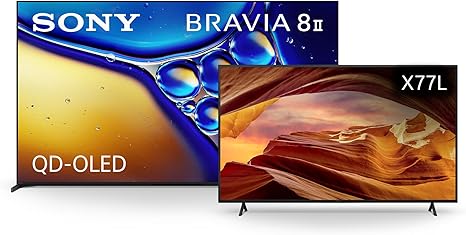
The Sony BRAVIA 8 II 55 Inch QD-OLED TV and the Sony X77L 50 Inch 4K HDR LED TV—these are the two names on the minds of tech enthusiasts right now, thanks to a limited-time promotion where you can snag both for the price of one, but let’s put the bundle aside for a moment and focus on what makes these two televisions stand out individually. First off, the BRAVIA 8 II isn’t just a TV; it’s a glimpse into the future of home entertainment, offering a Quantum Dot OLED display that promises vivid colors, deep blacks, and outstanding contrast. If you’ve been searching for a display that brings your favorite shows and movies to life with stunning visual depth, this might be the one. It has a sleek, modern design that easily fits into any contemporary living room, and it comes with built-in Google TV, offering seamless access to all your favorite streaming platforms, along with Google Assistant for hands-free control. The cherry on top? This television supports 4K resolution with Dolby Vision, making every viewing experience feel like an immersive, cinematic event.
Now, let’s talk about the X77L, a 50-inch 4K HDR LED TV that stands as a solid companion in any living space. With the promise of dynamic color and excellent HDR performance, this TV offers a crisp 4K resolution at a more accessible price point. It’s a great option if you’re looking for quality without breaking the bank, offering compatibility with both HDR10 and Dolby Vision for a rich viewing experience. But beyond the resolution and color depth, the X77L also features Motionflow XR, which promises smoother motion during fast-paced scenes—a definite plus for sports lovers or action movie buffs.
But how do these two perform in the real world? Starting with the BRAVIA 8 II, setting it up was effortless. Out of the box, the setup experience was intuitive, and within minutes, I had Google TV up and running. I tested the TV with a variety of content—from movies with stunning visuals to sports with high-speed action—and I was blown away by the picture quality. The Quantum Dot OLED technology delivers vibrant colors without the oversaturation, and the black levels were some of the best I’ve seen. The contrast is perfect, whether I was watching a dark, moody thriller or a bright, sunlit outdoor scene. The motion handling was also fantastic, making the fast-paced action scenes appear crisp and clear without any blur.
However, while the BRAVIA 8 II excels in most areas, it’s not without its faults. The biggest downside is its price point. This TV isn’t cheap, and while you’re getting top-tier display technology, it might be a bit out of reach for those on a budget. Plus, while the Google TV interface is smooth, it can occasionally feel a bit sluggish, especially when switching between apps. That said, if you have the budget for it, the performance certainly makes up for the premium cost.
On the other hand, the X77L is a more budget-friendly option, but it doesn’t sacrifice too much in terms of quality. Setting it up was just as easy as the BRAVIA, and I immediately noticed the sharpness of the 4K resolution. While it may not boast the same level of contrast as the BRAVIA, the X77L still offers excellent picture quality, especially for its price. Watching sports and fast-moving action movies was smooth, thanks to Motionflow XR, which helped reduce motion blur. However, the X77L lacks some of the advanced features of the BRAVIA, such as Dolby Atmos support, and the sound quality didn’t quite match up to what I’d hoped for in terms of depth and richness.
Now, when it comes to value for money, the X77L is certainly the better option for those on a budget. For what you’re getting, it’s a solid performer—4K HDR, Dolby Vision support, and smooth motion handling at a lower price. However, it does fall short in terms of its premium features and picture quality compared to the BRAVIA 8 II, which is a significant step up in terms of display technology and overall performance. But if you’re willing to stretch your budget, the BRAVIA 8 II is a true powerhouse that justifies the higher price with its stunning display and premium features.
Comparing these two against competitors, it’s easy to see why Sony has become a go-to brand for high-quality displays. While there are cheaper alternatives to the X77L, like the Hisense U6K or TCL 5-Series, these tend to lack the same level of color accuracy and smooth motion handling, especially when it comes to HDR content. As for the BRAVIA 8 II, it’s tough to beat in the OLED category, but brands like LG, with their OLED Evo technology, and Samsung, with its Neo QLED line, offer similar high-end performance at competitive prices.
When it comes to build quality, both the BRAVIA 8 II and the X77L feel solid and well-made. The BRAVIA, with its thin bezel and premium finish, feels like a luxurious addition to any home theater setup, while the X77L offers a more practical design that’s still very sturdy. While I can’t speak to the long-term durability just yet, considering Sony’s reputation for producing high-quality electronics, I expect both TVs to hold up well over time.
In terms of customer support, I haven’t had the need to contact Sony for either of these models yet, but the company has a solid reputation for customer service, with quick response times and effective solutions to any issues that may arise. The warranty coverage is standard, and as always, it’s a good idea to register your product for peace of mind.
As for updates, there hasn’t been anything groundbreaking in terms of firmware or software updates for these models yet. The BRAVIA 8 II and the X77L both run on stable software that provides a seamless user experience, but I’ll keep an eye on them for any significant changes in the future.
To wrap things up, both of these Sony TVs offer a lot, but they serve slightly different purposes. The BRAVIA 8 II is for those who want the absolute best in picture quality, with a premium price tag to match. If you’re after a show-stopping TV for your home theater and have the budget for it, this is an excellent choice. The X77L, on the other hand, provides impressive 4K HDR performance at a more affordable price, making it a great option for those who want solid picture quality without splurging. Whether you’re after the high-end experience of the BRAVIA or the more budget-conscious appeal of the X77L, Sony has you covered.
Thanks for watching, and if you’re considering one of these models, drop a comment below to share your thoughts or ask any questions you might have. We’d love to hear about your experiences or what features matter most to you. Goodbye for now, and remember—there’s always more to discover with Reviews inside tv!
Available to buy here:


