

Available to buy here:
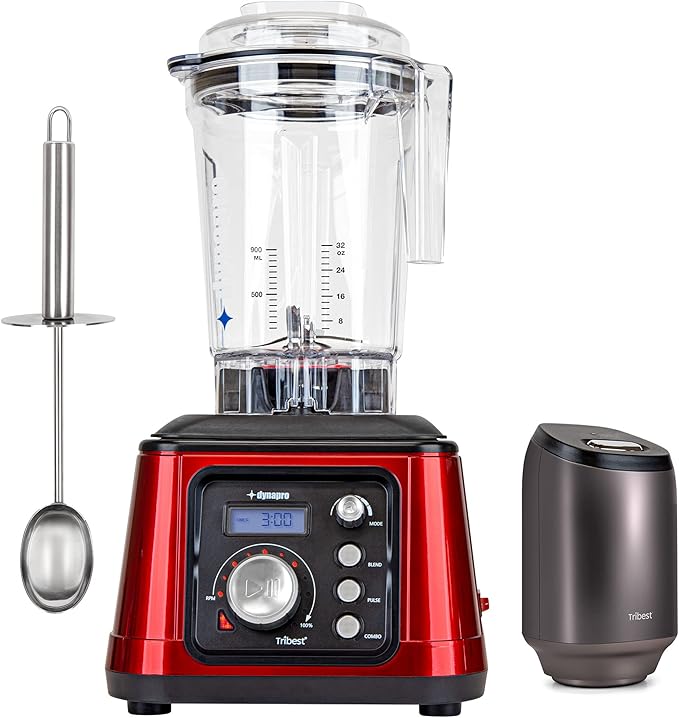
Welcome back to Reviews inside tv, where clarity meets curiosity and honest opinions actually matter. Today I’ve got something that instantly catches attention—not because it’s flashy, but because it quietly promises capabilities most blenders don’t attempt. This is the Tribest Dynapro DPS-2250, a high-speed, commercially certified blender with a 2.5-horsepower motor, a raw temperature indicator built directly into the container, and vacuum blending technology designed to protect flavors while preserving nutrients. It arrives looking tough, almost like it’s daring you to throw something ambitious into the jar, but at this stage let’s simply unpack what it is without handing out praise or criticism before it earns it.
The Tribest Dynapro sits in a space where a lot of people feel frustrated—slow, inconsistent blending, nutrient loss from heat build-up, watery textures, or leafy greens that somehow manage to survive every blending cycle. This model tries to address all of that by combining power, precision, & vacuum technology. With a 2.5-peak-horsepower motor hitting over 32,000 RPM, it’s engineered to break down ingredients fast, from ice & frozen berries to fibrous vegetables. The stainless-steel blades aren’t decorative—they’re built to sustain commercial-level workloads, which matters if you’re tired of blenders that buzz loudly but do very little. The container itself is where things get interesting. Tribest uses a vacuum blending system with a one-touch vacuum pump that removes oxygen from the jar before blending. This reduces oxidation, so your smoothies keep their bright color, their clean flavor, and more of the delicate nutrients that often disappear in traditional high-speed blending. On the outside of the jar is a Raw Temperature Indicator Star, which glows to let you know when the blend is heating up. That’s genuinely useful for anyone trying to keep recipes under raw-food temperature thresholds—because many high-speed blenders warm food without you realizing it. These features are all aimed at making blending smoother, cleaner, & more nutrient-friendly, especially for people who care deeply about texture & food quality at a detail-oriented level.
Living with the Dynapro feels like dealing with a machine that wants to be both powerful & thoughtful, which isn’t a common mix in blenders. Setting it up is straightforward: plug it in, secure the container, attach the lid, and you’re ready. The controls use preset options for blending & pulsing, so you don’t have to guess your way through a smoothie or sauce. During actual testing, I ran it through several scenarios. First, frozen fruit—solid, dense, and always the real test of blade power. It crushed through with no hesitation but didn’t overheat the mixture, which is exactly where that Raw Temperature Indicator becomes quietly helpful. Next was leafy greens, something a lot of people complain about when bits get stuck under the blades or cling to the sides. With the vacuum engaged, the greens pulled downward more consistently, reducing the aeration that normally whips in foam and leaves that gritty texture behind. Sauces and soups came next, and while the blender is perfectly capable of warming mixtures through friction, the indicator star let me know exactly when I hit that threshold. One area where I felt things could be smoother is noise level; it’s a powerful 2.5-horsepower motor, so I wasn’t expecting silence, but if you’re blending early in the morning, it’s not subtle. Another test involved nut butters. The blender handled almonds and cashews, but you definitely have to use the presets carefully; otherwise the mixture heats faster than expected. Still, the end result was smooth, without the chalky finish that underpowered blenders produce.
Since we’re already deep into the experience, let me pause for a second—if you enjoy honest, deeply detailed product breakdowns like this, take a moment to like the video, subscribe to Reviews inside tv, and tap that bell icon so you never miss a review that could save you money or frustration later. Alright, let’s get back into it.
There’s quite a lot to like here, but also a few things that might make someone hesitate depending on their expectations. On the positive side, the power genuinely does what it claims to do. It handles dense ingredients without strain, and the stainless-steel blades feel like they’re built for the long haul. The vacuum pump isn’t a gimmick—it actually improves texture & taste, especially with smoothies or green blends. You can see the reduced oxidation right away because colors stay vivid instead of fading into that dull brownish tinge that many people dislike. The container’s temperature star is surprisingly useful for anyone making raw soups or heat-sensitive recipes. But it’s not all perfect. The noise level is a noticeable factor, and while it’s commercial-grade power, not everyone wants that intensity in their kitchen. The footprint is also bigger than a standard blender, so kitchens with limited counter space might feel the squeeze. And while the presets are convenient, some users may crave slightly more granular control in manual mode. A few of these cons come down to personal preference—someone who values raw blending precision won’t mind the footprint, while someone who blends once a week might feel it’s excessive. The objective drawback is noise, because there’s no way around the volume of a 2.5-horsepower motor.
Talking price, the Dynapro doesn’t sit in the budget blender category. It positions itself among premium high-performance machines. For the cost, buyers expect durability, smooth results, and features that truly add value. The vacuum system and raw temperature indicator are what give this model its identity, and they justify the pricing more than brute power alone. In terms of durability, the machine feels like something meant for heavy daily use, not occasional smoothies. Compared to other blenders in the same pricing tier, many lack vacuum technology entirely or rely on less powerful motors. That said, there are alternatives with more advanced touch controls or quieter performance. Whether the Dynapro is worth the investment ultimately depends on how important vacuum blending, raw-temperature tracking, and commercial-grade power are to your workflow.
When comparing the Dynapro DPS-2250 to similar high-end blenders, the differences become clearer. Some competitors in this price bracket lean heavily into digital interfaces with multiple speed steps and touchscreen panels, while the Dynapro focuses more on mechanical durability and function-driven design. It doesn’t chase aesthetics or digital complexity. Its closest competitors typically offer noise-dampening housings or multi-program automation; the Dynapro instead offers vacuum technology and raw-temperature monitoring, features that many alternatives simply don’t include. Power-wise it’s right in line with other 2+ horsepower blenders, but the vacuum system sets it apart because it changes the texture and oxidation level in a way standard blenders can’t replicate. For someone who values nutrient preservation and recipe consistency, this becomes a defining difference.
The build quality is where the commercial certification starts to show. The motor base is sturdy, heavy enough that it doesn’t shuffle around the counter when blending tougher ingredients. The blades are high-grade stainless steel, and the container feels durable, resisting clouding and staining better than thinner plastics. Tribest has a long-standing reputation for producing equipment used in raw-food environments, juice bars, and wellness-focused kitchens, so even without years of data on this exact model, the brand’s track record makes the durability claims believable. The vacuum pump feels well-built too—not fragile or cheaply assembled, which is important since it’s a mechanical component you’ll use frequently if you bought the blender for its full capabilities.
As for customer support, Tribest generally maintains a strong reputation for responsiveness and knowledge, especially within the wellness and health-focused appliance market. While I didn’t need assistance during my testing, owners often note that Tribest provides helpful solutions and quick communication. With a product in this price range, good support matters because customers expect guidance if anything goes wrong or if accessories need replacement.
Bringing it all together, the Tribest Dynapro DPS-2250 stands out for blending power with functional innovations instead of flashy features. It offers strong performance, noticeably improved textures when using the vacuum system, and thoughtful elements like the raw temperature indicator that genuinely make a difference if you’re blending heat-sensitive ingredients. It isn’t the quietest option, and its size may not suit smaller kitchens, but it fulfills the promises it makes—especially for people who blend often, prioritize nutrient retention, or want commercial reliability at home. If you’re someone who just wants a basic smoothie now & then, you might find this blender more than you need. But if you want precision, power, and vacuum blending all in one system, it becomes much more compelling.
Thank you for spending your time here with Reviews inside tv. If you’re considering this blender, the link to get it is waiting for you in the comments box. Feel free to drop your thoughts below or share your experience if you already own it. Until next time, take care—this is Reviews inside tv, where the truth about products always finds its way to the surface.
Available to buy here:


