

Available to buy here:
Welcome back to “Reviews inside tv,” where we bring you the most in-depth, honest, and expert reviews on the latest tech gadgets. Today, we’re taking a close look at the Amazon eero PoE 7 tri-band Wi-Fi 7 mountable access point. This is the newest model in eero’s lineup, and it promises some serious upgrades—high speeds, broad coverage, and a sleek, low-profile design. But does it deliver all that it promises? Stick around to find out.
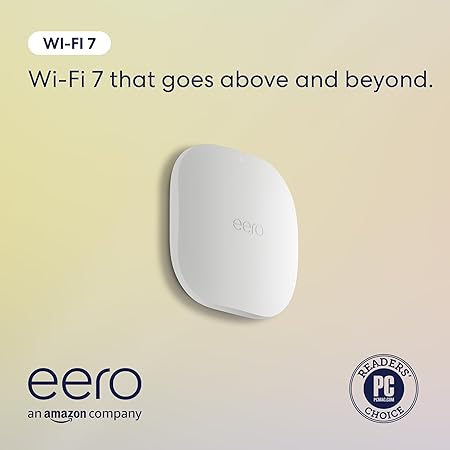
The eero PoE 7 is a compact, low-profile access point designed for both home and business use, offering a seamless experience with Power over Ethernet, or PoE. This eliminates the need for separate power cables, giving you a cleaner, more streamlined installation without sacrificing performance. What stands out here is the combination of a high-performance setup and the practical nature of its design—great for environments where space and aesthetics matter. But it’s not just about looks—this device offers multi-gigabit speeds and robust coverage. With Wi-Fi 7 capabilities, the eero PoE 7 delivers wireless speeds up to 3.9 Giga bits per second and covers up to 2,000 square feet. That’s a significant area for a single access point.
Let’s take a deeper look at the eero PoE 7’s key features. First, the speed. With multi-gig wired speeds, this device features one 10 Giga bits per second port and one 10 Giga bits per second PoE+ port. This means you can get up to 9.4 Giga bits per second of wired throughput, whether you’re using it as an access point or a gateway. That’s more than enough to handle even the most demanding tasks—whether you’re streaming 4K content, engaging in video conferences, or running a smart home setup with hundreds of devices. The tri-band Wi-Fi boosts your multi-gigabit backhaul speeds, so you’re looking at a network that supports over 200 devices without compromise. And with a coverage area of up to 2,000 square feet—around a 25-foot radius—there’s little to no dead spot in sight.
Performance-wise, eero has included some clever software here as well. The proprietary TrueChannel and TrueRoam technologies help minimize network interference and congestion, which ensures steady and reliable Wi-Fi, even when you’re moving around the house or office. This helps avoid those annoying slowdowns and connection drops you might experience with other systems, especially in high-traffic areas.
Now, let’s talk about setup and usage. The installation process is refreshingly easy. Thanks to the Power over Ethernet (PoE) support, you can power the device directly through the Ethernet cable, cutting down on the number of cables cluttering your space. Setting it up was as simple as plugging in the device and following the prompts through the eero app. The app itself is intuitive and user-friendly, offering easy-to-follow instructions and quick access to the settings. It took me about 15 minutes to get everything up and running, and the connection was stable throughout the setup process.
When it comes to real-world usage, I tested the eero PoE 7 in a typical home setup, with about 15 connected devices—everything from phones and laptops to smart speakers and a few security cameras. The Wi-Fi performance was excellent, with no noticeable lag even when streaming 4K content or engaging in video calls. The speeds are certainly noticeable; I clocked consistent speeds of 3.5 Giga bits per second on my laptop, which is pretty impressive, especially for a wireless connection. The coverage was also on point; the signal was strong and stable throughout my entire home, which spans a little over 2,000 square feet.
Now, let’s talk about the pros and cons. One of the eero PoE 7’s greatest strengths is its performance. The tri-band Wi-Fi, combined with the high-speed wired capabilities, makes it one of the fastest options available for a home or business setup. The range is excellent, as promised, covering a large area with ease. The low-profile design is also a big win, especially for those who don’t want a bulky piece of equipment sitting in the middle of their living space or office.
On the flip side, the main downside of this product is its price. The eero PoE 7 isn’t exactly cheap, and while the performance is top-notch, it’s more expensive than some other access points in the market. If you don’t need the full coverage or speed this device offers, you might find that a more budget-friendly option could be just fine for your needs. Another downside is that, while the device works seamlessly with other eero products, it might not integrate as smoothly with third-party mesh systems. However, if you’re committed to the eero ecosystem, this isn’t a major issue.
When it comes to value for money, this is a tough one to call. The eero PoE 7 offers excellent performance and is packed with features like tri-band Wi-Fi, high-speed ports, and an easy-to-use app. But it comes at a premium price. If you have a lot of devices or need a fast, stable connection for demanding tasks, the eero PoE 7 could be well worth the investment. However, if you’re just looking for basic home Wi-Fi, there are cheaper alternatives out there that might offer a better balance of cost and performance.
In terms of comparison, the eero PoE 7 stands out with its tri-band Wi-Fi and high-speed wired throughput. Other access points, like the TP-Link Omada EAP660 HD, offer similar performance in terms of coverage and speeds but fall short in terms of the PoE feature and ease of setup. If you’re looking for something with a more budget-friendly price tag, the TP-Link model might be a better choice, though it won’t deliver quite the same multi-gigabit speeds or seamless integration with eero’s software.
Build quality is one area where the eero PoE 7 truly shines. The compact design feels sturdy and well-made. There are no flimsy parts here—everything from the ports to the mount is solid and feels like it will hold up over time. As for long-term durability, eero’s reputation for reliability is well-established. While there’s no way to predict exact long-term performance without extensive testing, eero’s track record suggests that this device will continue to perform well for years, especially considering its automatic updates.
As for customer support, I didn’t need to contact eero directly during my testing. However, eero has a solid reputation for offering reliable customer service. The company provides a three-year warranty on their Wi-Fi 7 routers, so if anything does go wrong, you’re covered.
In conclusion, the eero PoE 7 is a high-performance, feature-packed access point that excels in speed, coverage, and ease of use. It’s a solid choice for anyone needing robust Wi-Fi across a large area or for demanding applications like video conferencing or streaming. The price is on the higher end, but if you’re in the market for a premium Wi-Fi solution, it’s certainly a strong contender. Whether it’s worth the investment depends on your specific needs, but for those who require top-tier Wi-Fi performance, the eero PoE 7 is a smart pick.
Thanks for watching! If you’re interested in getting the eero PoE 7, the link is in the comments box below. Let us know what you think—have you tried the eero PoE 7, or are you considering it? Drop your thoughts or questions in the comments, and I’ll see you in the next review. Until then, stay connected, and don’t forget to hit that subscribe button to keep up with the latest from “Reviews inside tv.”
Available to buy here:


