

Available to buy here:
This is a hands‑on look at the Amazon Fire TV 55″ Omni QLED, brought to you by Reviews Inside TV.
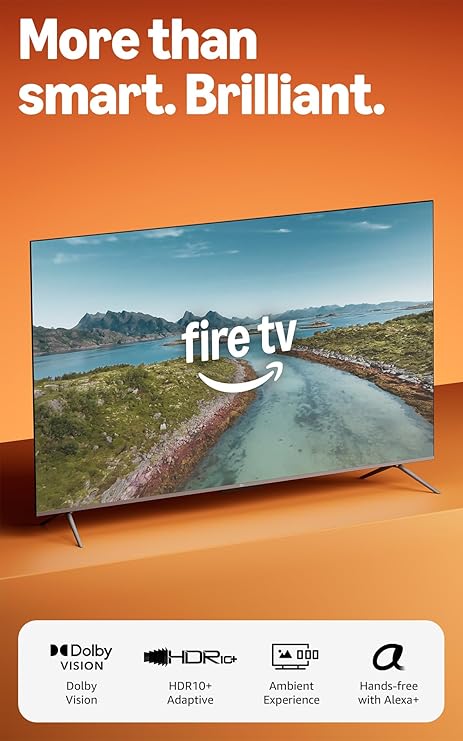
Let’s jump in. This is Amazon’s 55‑inch QLED smart TV, built around a 4K Ultra HD panel with quantum‑dot colour, full‑array local dimming, and support for both Dolby Vision and HDR10+ Adaptive. It runs Fire TV OS, with built‑in, always‑listening Alexa mic (with a physical mute switch for privacy), and claims fast performance thanks to its quad‑core chip and Wi‑Fi 6 connectivity. There are four HDMI ports for plugging in consoles or sound systems, plus ambient or “Omnisense” technology to wake or dim the screen based on motion or room lighting.
That’s the headline, but what does that mean for real use — and is it a TV you should seriously consider? Let me walk you through my experience, what shines, what falters, and who this TV is for.
When I first unpacked it, the TV immediately feels modern and clean. The bezels are quite slim, and the stand design is minimal. Setting it up is reasonably straightforward: just connect to power, plug in your Wi‑Fi (or ethernet), and power on. The “Instantly On” feature described as Omnisense means it wakes up quickly when you walk into the room or when motion is detected — useful if you don’t want to fiddle with a remote constantly. From there, the Fire TV OS boots into its familiar home screen, with apps like Netflix, Prime Video and Disney+ ready to go.
In day‑to‑day viewing, the picture is bright and punchy. The quantum-dot layer brings rich, saturated colours without overdoing it, so nature documentaries and streaming shows feel vibrant but not cartoonish. The full-array local dimming does a decent job: blacks are darker than a typical edge-lit budget TV, and highlights pop fairly well. That said, it’s not quite Mini-LED or OLED level – you won’t get perfect darkness in every scene, but for its tier, it’s impressive. In HDR content, Dolby Vision really stands out: it dynamically adapts, and when combined with the room sensor (part of the Adaptive HDR modes), the TV adjusts brightness smartly to suit your environment.
On the gaming front, this TV is surprisingly capable. Under 4K Dolby Vision gaming, it supports variable refresh rate (VRR) and ALLM (auto low-latency mode), which makes fast action feel smoother. When I tested with a console, input lag was very low — one reviewer measured around 10.4 milliseconds, which is excellent for a budget 60‑Hz set. However, it maxes out at 60 Hz: there’s no 120 Hz HDMI 2.1 mode, so for ultra-high-frame-rate gaming, it’s not the top pick.
The audio is serviceable but modest. It uses a 2.0‑channel speaker system. In “Movie” mode you get more bass and a fuller sound, but don’t expect Dolby Atmos or booming cinematic audio. For immersive sound, a soundbar or external system will make a difference, especially for films or gaming.
Navigating the Fire OS feels familiar if you’ve used Amazon’s Fire TV devices before — but some users report that over time it slows slightly, especially with many apps installed. There’s a little bit of lag switching between apps or navigating menus, which is worth noting, though for many daily viewers it may not be a deal-breaker.
Midway through, if you’re enjoying this breakdown, feel me a like, hit subscribe, and don’t forget to ring the bell so you don’t miss our future in‑depth reviews.
Looking at the good stuff: the colour performance is a real win, thanks to QLED. The full-array local dimming meaningfully improves contrast, especially in dark scenes. The dynamic HDR via Dolby Vision IQ and HDR10+ Adaptive is a clever touch, adjusting picture based on room lighting, which makes content feel more natural throughout the day. Then there’s hands-free Alexa — you can speak commands even when the TV is off, which is wonderfully convenient. Also, the price is strong considering the feature set; you get more than just a streaming TV.
On the flip side: refresh rate is limited to 60 Hz, which limits the gaming experience compared to 120 Hz sets. The built-in speakers are basic. The Fire OS performance, while usually smooth, can lag if the TV is loaded with apps. And some users have reported blooming or halo effects around bright objects due to the 80‑zone dimming, which is not uncommon in this tier but is still a compromise.
When it comes to value, this TV is competitive. For similar money, you could look at other Fire TV models or budget QLEDs, but few pack in Dolby Vision, local dimming, and full Fire OS integration. For example, the Amazon Fire TV 4‑Series 55″ is cheaper, but lacks quantum‑dot colour and advanced HDR features. Meanwhile, slightly more advanced or premium TVs (or ones from traditional TV brands) might give you better backlighting or refresh rate — but at a higher cost.
Comparing to alternatives, the TCL 4K QLED Fire TV is another Fire‑OS TV in the QLED space; it’s solid, but doesn’t quite match the Omnisense dimming zones or Dolby Vision IQ. The Panasonic 4K QLED Fire TV might offer a more refined panel but is often more expensive, and rarely includes the same value for the feature-to-price ratio.
In terms of build quality, the materials are decent: the bezel feels well made, and the plastic build doesn’t feel cheap. Based on Amazon’s track record and user feedback, there haven’t been widespread reports of major hardware failure. However, some users mention long-term software slowdowns or minor panel issues (like dead pixels), so it’s not without risk — but expertise from similar Amazon TVs suggests it should hold up reasonably well with moderate use.
As for customer support, I didn’t personally go through service, but Amazon’s brand support is solid, and Fire TV units are generally covered under standard warranty. Given Amazon’s ecosystem, replacement or support tends to be more streamlined than lesser-known brands.
This TV doesn’t rely heavily on firmware updates for major changes, so there’s no heavy maintenance or ongoing software dependency. What you get now should largely be what you’ll use day to day.
In summary, the Amazon Fire TV 55″ Omni QLED is a smart, feature-rich TV that punches above its weight. It offers a compelling mix of quantum-dot colour, strong HDR with adaptive brightness, low input lag for gaming, and hands-free Alexa — all at a price that feels fair for what’s inside. Its weaknesses — 60 Hz cap, modest audio, and potential UI slowness — are real but understandable at this tier. If you want a stylish, smart 4K TV with good HDR and you don’t need super-high refresh rates, this could be a really sensible choice. For gamers chasing 120 Hz or cinephiles demanding top-tier black levels, there are more premium options — but for its price and feature set, it’s a solid, well-rounded pick.
Thanks for sticking with me through the review. Drop a comment below if you’ve got questions or you’re already using one — I’d love to hear your thoughts. You’ll find a link to check the current price in the comments box. Good bye till next time, and keep it real — Reviews Inside TV, signing off.
Available to buy here:


