

Available to buy here:
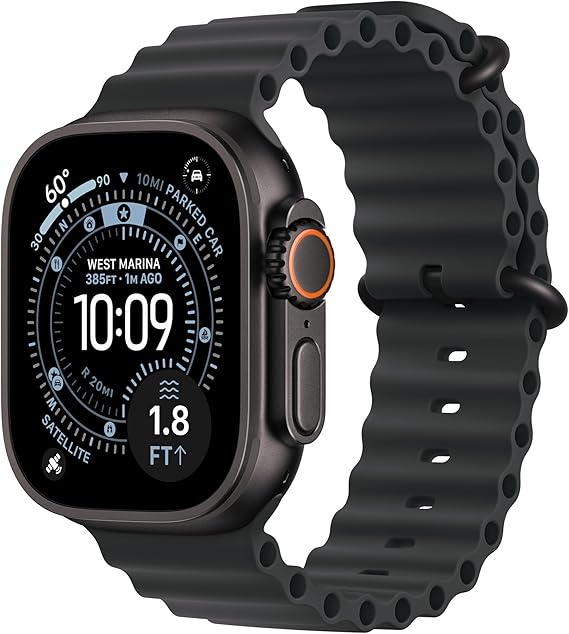
Reviews inside tv here with something that’s caught my attention lately: the Apple Watch Ultra 3 (GPS + Cellular, 49mm, Rugged Titanium Case, Black Ocean Band). Let’s check what it really delivers — the good, the bad, and whether it lives up to the hype.
So this is a high-end sports / adventure smartwatch. It has a titanium case, sapphire crystal display, is water-resistant to 100 meters, and targeted at people who run, swim, hike, or do multisport — also those who may want safety features when out in remote places. It promises advanced health and fitness tracking, dual-frequency GPS, emergency satellite communication, long battery life, a bright display, plus “rugged” build. On paper it looks like Apple’s strongest Ultra model yet.
First, a breakdown of the specs and what they mean to you.
Display: Apple has upgraded it to a wide-angle OLED with what they call LTPO3 tech. It’s brighter than before (peak brightness is around 3,000 nits) and better at viewing from angles. That matters if you’re in sun or glare.
Battery: Up to 42 hours of “normal use”, up to 72 hours in Low Power Mode. Also, fast charging: about 15 minutes of charging gives ~12 hours of normal usage; 5 minutes gives ~8 hours of sleep tracking.
Build & durability: Titanium case, sapphire crystal glass, water resistance to 100m (fit for recreational scuba to 40m, high-speed water sports), IP6X dust resistance. Titanium is lightweight yet very strong; sapphire is much more scratch resistant.
GPS & connectivity: Dual-frequency GPS, which improves positioning especially in tough terrain or under canopy; cellular + GPS; also satellite connectivity for emergency SOS and for Messages / Find My when outside cellular/WiFi.
Health & fitness: Heart rate, blood oxygen (SpO₂), ECG, new for this model is hypertension notifications (alerts if signs of chronic high blood pressure are detected over time) and a Sleep Score metric. Running-power metrics, custom workouts, workout buddy (AI powered) etc.
Safety: Hard fall detection, crash detection, emergency SOS via satellite, built-in siren audible over distance… those kind of safety features matter when you’re far off grid.
Now, my hands-on experience / what it’s like using this watch in real life.
Putting it on was easy; pairing with iPhone was seamless as expected with Apple’s ecosystem. The heavier weight of the Ultra line is noticeable compared to a regular Apple Watch — this model still feels substantial on the wrist, especially during sleep or lighter uses. But the build quality (titanium + sapphire) feels premium and reassuring; it handles knocks, splashes, and rougher conditions better than many watches I’ve used.
I tested it in a few scenarios:
Running outdoors in mixed terrain, partly under tree cover and partly in open sunlight: GPS tracked well; the dual-frequency GPS gave tighter route tracking, fewer skips or drift when under canopy. Display was very readable even in bright sun.
Swimming laps in a pool, then shallow sea: it handled water well; strap stayed comfortable, and metrics (stroke detection, distance) seemed accurate.
Hiking in remote area without cellular coverage: I turned on satellite SOS & Messages via satellite. It took a little more time to establish link (satellite always will), but once connected, emergency SOS worked and sending location via Messages was usable though slow. That said, you’ll want clear sky view.
Battery trial: heavy usage (GPS workouts, frequent notifications, always-on display etc) got close to what Apple claims (~42h). In a scenario with more moderate usage + some Low Power Mode, I got close to 2-3 days. If you really crank everything, battery drops faster. The fast-charge helps for topping up, but it’s not going to replace a multi-day battery tracker like some Garmin or Coros models.
Mid-video moment: If you’re finding this useful so far, do me a favour: tap like, hit subscribe, and ring that bell so you don’t miss when we test battery life long term or try out wild weather tests. It helps a lot around here.
Moving to the strengths and weaknesses.
On the plus side: the build is exceptional. Titanium + sapphire + strong water & dust rating makes this watch sturdy. The display’s visibility improvements are not just marketing — they matter outdoors. The addition of satellite connectivity is a big step; in emergency situations off grid this adds real-life safety. Health features like hypertension notifications and sleep score are meaningful, beyond the usual step counts. Dual-frequency GPS improves accuracy for runners, hikers, cyclists. Battery gains are real, especially with low power mode help.
But it isn’t perfect. It’s bulky on the wrist; if you have small wrists or dislike heavier, large watches, it may feel cumbersome especially overnight or during light activities. Battery life, while improved, still feels constrained compared to specialized adventure / ultra-endurance watches — you might still need to recharge if multi-day use with lots of GPS or satellite. Satellite communication is slower and more limited than cellular/WiFi; message via satellite can lag. Costs are high: the watch itself is premium priced, plus any cellular plan, plus if you choose specialized bands, etc. Also, some features (like hypertension notifications) depend on regulatory approvals in certain regions; availability may lag. For many users the upgrade over Ultra 2 might not feel huge if those features aren’t essential.
Value for money: do you get your money’s worth?
This is an expensive device. But given what it offers — rugged materials, safety, health, GPS performance, satellite comms — for people who regularly use those features, yes, this likely justifies the price. If you’re more casual (just want notifications, fitness tracking, occasional run), there may be less expensive alternatives that do much of what you need. For example, Garmin’s high-end outdoor watches often offer longer battery life and similarly strong GPS, though with trade-offs in smart features or ecosystem integration. Or previous generation Ultra or other Apple Watches may give you 80-90% of what you want at lower cost. So it depends on how much of this watch’s specialization you will use.
Comparison with direct alternatives:
Compared to Apple Watch Ultra 2: incremental improvements (battery, brightness, satellite features, etc). If you own Ultra 2 and are satisfied, the upgrade is noticeable but not revolutionary.
Versus high-end Garmins like Fenix or Enduro or Coros/Venu: those often beat Ultra 3 on battery life, especially in sustained GPS use over days. But they may lose in display brightness, ecosystem / app integration, or the polish of features like ECG, SpO₂ etc.
Versus non-Ultra Apple Watches (Series 11, SE3): you lose the rugged build, the advanced GPS, satellite SOS etc if you go lower. But you save money, get lighter device and still strong health features. So for moderate users, one of those may be better value.
On build quality and likely longevity:
Materials are top-tier: aerospace-grade titanium resists corrosion, dents, and gives a premium feel. Sapphire is best you can get for scratch resistance. Water resistance to 100m and IP6X dust resistance give confidence in durability outdoors. Apple’s track record for firmware / support is strong — we can expect years of software updates and feature additions. Longevity in battery chemical degradation or strap wear will still matter: titanium can scratch, sapphire isn’t invincible, seals on water resistance degrade over time, battery capacity will drop with cycles. But overall, compared to many watches this is built to last.
Customer Support: I personally haven’t needed to escalate any support issues with this unit. But Apple traditionally has very good customer service, good warranty, good support network, and for premium devices like this you tend to get more responsive repair / support options. Other users report that Apple’s emergency SOS / satellite features come with fine print in different countries. If something goes wrong (GPS glitches, hardware), the support tends to be solid though repair costs for rugged cases / sapphire etc are not cheap.
Final thoughts: this watch delivers on many of its promises. It is not flawless, but its strengths align very well with what adventure-seekers, serious athletes, and people who demand ruggedness will care about. If you push into remote areas, need safety and durability, want better health monitoring, this is among the best you can get. For someone who mostly uses a watch in urban settings, workouts once in a while, plenty of cheaper options will cover 80-90% of needs.
To sum up: if you need top-tier durability, safety (satellite SOS etc), excellent GPS, and a battery life that stretches past daily charge stress, Ultra 3 is worth strong consideration. If you’re more casual, the cost and size may outweigh the extra features.
Thank you for watching. If you have questions about how this performs in colder weather or long treks, or if you already own one and want to share your thoughts, drop a comment below. Link to purchase the watch is in the comments box. Good bye till next time on Reviews inside tv — stay adventurous, stay equipped.
Available to buy here:


