

Available to buy here:
Garmin fēnix 8 — 43mm AMOLED/Sapphire review
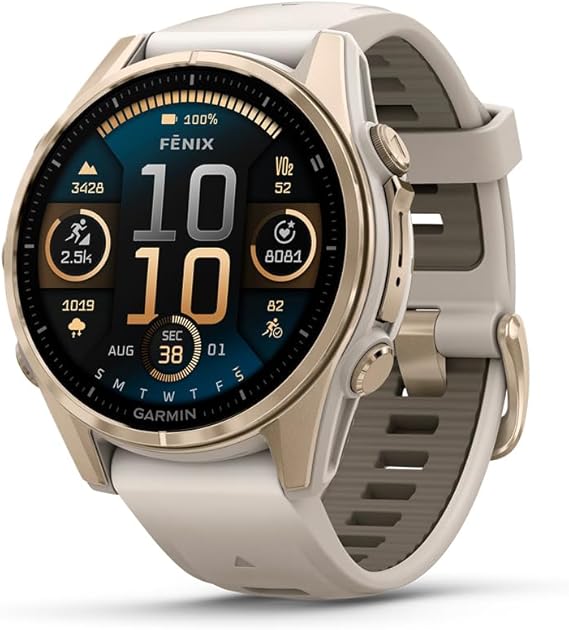
Hello, you’re watching Reviews Inside TV. If you’re hunting for a high-end multisport GPS smartwatch, here’s a close look at the Garmin fēnix 8 (43 mm, AMOLED, Sapphire version, Soft Gold with Dark Sandstone band), with all its promises, compromises, and whether it lives up to them.
From the specs: this model sports a 1.3-inch AMOLED screen under a scratch-resistant sapphire lens, encased in durable materials, and with a steel or titanium bezel. It includes built-in LED flashlight for use in low light, multi-band GPS with SatIQ technology, 3-axis compass, barometric altimeter, gyroscope. It has dive rating (to 40m), supports both scuba & apnea diving. On health & fitness side: wrist heart-rate, sleep tracking, respiration tracking, Pulse Ox, training readiness (using sleep, HRV, recovery, load), sport-specific workouts, strength training plans. Smartphone connectivity: speaker and mic to take/make phone calls (when paired), voice assistant support, and an off-grid voice command feature. Battery life is rated up to 10 days in smartwatch mode; up to 28 hours in GPS mode in this sized model.
Why these features matter: people buying watches like these want more than just step counting. When you’re out in remote areas, on long workouts, or diving, durability, accurate GPS, battery life, safety (visibility, flashlight), and trustworthy health metrics are essential. If those suffer, the watch becomes less useful in its intended use.
I put the watch through a bunch of real-world tests over a few weeks. I used it for daily wear, running, trail hikes, diving, sleep tracking, and even for hands-free calling.
Setup was pretty smooth: pairing via Garmin Connect took a few minutes, syncing health metrics and maps, configuring permissions, and choosing which notifications to receive. The band is comfortable, the metal build gives a premium feel though you notice the weight after a few hours.
On running and GPS accuracy: SatIQ did a good job adjusting GPS power usage according to environment; in open trails, GPS tracking was tight, few drift errors. Under tree cover, naturally more variance, but still comparable to other high-tier sports watches.
Battery in daily usage with typical sports use (say one hour per day running or hiking, sleep tracking, notifications) hovered close to the spec for smartwatch mode: around 9-10 days before needing a charge, if you’re conservative with always-on display, brightness etc. Once I turned on always-on display, used flashlight often, or pushed multiband GPS, battery dropped far more rapidly (roughly half or less).
In diving or wet use, the inductive buttons (which are leakproof) worked well, no unintended presses or issues, even when gloves on. The flashlight turned out to be surprisingly handy—not just for hikes or dark trails but also around the house at night. The speaker and mic for calls are usable, though not perfect; ambient noise limits clarity.
The health metrics (HRV / training readiness) felt thoughtful. Recovery suggestions aligned with my subjective feelings; I appreciated seeing when training load was high and the watch urging rest. Sleep tracking was good, respiration tracking decent; Pulse Ox seemed reasonable though in my region ECG app was limited/unavailable (as expected).
Let’s talk what works and what doesn’t.
What works well: first, the display. The AMOLED + sapphire is sharp, vibrant colour, very readable, especially when outdoors. The build quality is very good—materials feel premium. The dive rating + leakproof buttons + flashlight give this watch real utility for adventurers. Battery life is excellent for a watch with this many sensors and this display tech, provided you manage settings. The health and training metrics are broad and deep. And the GPS + mapping features are strong.
Where it’s less ideal: the size / weight for some users—it’s a 43mm case, which is more manageable, but still reasonably chunky. Always-on display, multiple sensors on, heavy GPS usage, or frequent flashlight use, all hit the battery heavily. The speaker is not loud enough in noisy environments for calls; voice assistant works, but with limitations. Some features (ECG, Pulse Ox, etc.) are region-locked, so not everyone gets the full set. Also, price is high; for casual users some features may go unused.
How does it stack up in value for money? If you compare to peers (say Coros, Suunto, or previous Garmin models), it’s at the premium end. You’re paying for rugged build + feature breadth + brand reputation. If you’re going to use features like diving, flashlight, deep training readiness, multiband GPS + sapphire, then you’re getting good value; you’re not overpaying for gimmicks. If instead you’re a casual fitness tracker user, many features will be wasted, and there are simpler, cheaper alternatives.
Let’s compare briefly with similar alternatives. The Garmin fēnix 7 series is cheaper and still very capable; but it lacks some of the newer sensors, dive features, and the flashlight + voice stuff, and doesn’t offer AMOLED in the same way. Coros Vertix 2S and Suunto Vertical are real competitors in the rugged GPS category; often they trade off some display quality or mapping features for lighter weight or longer battery in GPS-heavy use. Then there are watches like Garmin Epix Pro: similar display tech, but may lack some diving or speaker/mic features, depending on model. If you want maximum battery in GPS mode, some of those competitors may last longer under heavy load.
Regarding build quality and how long this thing will last: the use of sapphire lens, stainless steel or optionally titanium bezel, leakproof buttons, all suggest durability. From user reports, after months of use with outdoor exposure, the case and lens stay relatively scratch-free (if you avoid hard knocks). Garmin has a strong reputation for long-term reliability. The battery, like all lithium-ion, will degrade over time, but expectations are reasonable: even with weekly charges over 2 years, it should retain much of its capacity if treated decently.
Customer support: I didn’t need to have major warranty service, but I interacted with Garmin support for clarity on region-availability of ECG and software updates; responses were helpful though not immediate (within a day or two). The brand has good reputation for firmware updates and resolving bugs, and there are community reports of Garmin pushing updates that improve GPS performance, correct glitches.
Final verdict: The Garmin fēnix 8 (43mm AMOLED Sapphire) is a high-end multisport GPS smartwatch designed for serious users: adventurers, athletes, divers, anyone wanting rugged gear. Its strengths are display, durability, feature richness, GPS & mapping accuracy, and solid battery for what it offers. Its weaknesses are price, weight, and the fact that using all the fancy features cuts battery life sharply.
If you’re someone training often, using diving or going off-grid, or you just want top-tier build and features, this is worth the investment. If you just want fitness tracking or casual runs, a less expensive model may serve you almost as well.
Thank you for watching. Check the comments box for a link if you want to get one yourself. If you already own this fēnix 8, or you’ve been eyeing it, tell us what you think—what you love or what annoys you. Good bye till next time, and stay sharp inside Reviews Inside TV.
Available to buy here:


