

Available to buy here:
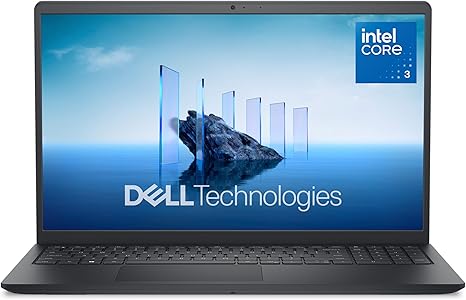
Welcome to “Reviews inside tv.” Today, we’re checking out the Dell 15, a laptop designed for those who need a reliable, efficient tool for everyday computing tasks. With a 15.6-inch FHD display, Intel Core i3 processor, 8GB of RAM, and a 512GB SSD, it promises to handle basic productivity, media consumption, and casual multitasking with ease. But how does it really stack up in day-to-day use? Let’s dive in.
The Dell 15 sports an Intel Core i3-1005G1 processor, which is a low-power CPU designed for budget-friendly laptops. It’s paired with Intel UHD Graphics, making it a good fit for light office tasks, browsing, and media consumption. However, don’t expect it to handle demanding workloads like video editing or gaming smoothly. The i3 processor performs well for general use, but if you’re looking for more power for creative or intensive applications, you’ll likely want to consider something with a higher-tier processor.
In terms of memory, it comes equipped with 8GB of DDR4 RAM. This is standard for laptops in this price range and provides sufficient performance for tasks like web browsing, document editing, and light multitasking. However, if you frequently run multiple apps or need to juggle many tabs, you might feel some slowdowns. The good news is, the 512GB SSD provides fast boot-up times and quick access to files, making everything feel snappy for general computing needs. Compared to traditional SATA drives, the SSD ensures that you won’t experience the sluggishness associated with older, slower storage technology.
The 15.6-inch FHD display has a 120Hz refresh rate, which is a nice touch for smoother motion in videos and for web browsing. For media consumption, it’s more than capable, with good color reproduction and decent brightness. The ComfortView feature is a standout, reducing blue light emissions to help reduce eye strain, especially if you’re using the laptop for extended periods. This is particularly useful for students or professionals who spend a lot of time on their devices. But while the screen is decent, it doesn’t have the rich vibrancy of higher-end displays like OLED or mini-LED, so creators may find it lacking for color-accurate work.
Battery life is another area where the Dell 15 shines, thanks to its energy-efficient design and ExpressCharge support. The battery can easily last through a day of office work, with light web browsing, emails, and document editing giving you anywhere from 8 to 10 hours of use. The ExpressCharge feature is handy for quickly topping up the battery, so if you’re in a rush, you can charge it up for an hour or so and get several more hours of use.
The laptop’s keyboard is a nice surprise, especially with its separate numeric keypad and calculator hotkey, making it easier to get through number-heavy tasks. The lifted hinges provide a more ergonomic typing angle, which is a thoughtful design element for comfort, especially if you’re typing for long periods. The trackpad is responsive, though it’s not as spacious or precise as those found on more premium models. Overall, it’s functional, and most users will be able to work comfortably for extended periods.
As for the ports, the Dell 15 offers a solid selection of connectivity options, including USB-A, USB-C, an HDMI port, and an SD card reader. It also supports Wi-Fi 6, which provides faster and more reliable wireless connectivity, making it a good option for online meetings, video streaming, or large file transfers. The laptop lacks Thunderbolt support, which might be a downside for users needing fast data transfer speeds or the ability to connect to multiple external displays. The good news is that the 512GB SSD is more than enough for most users’ storage needs, and there’s no shortage of ports to connect external devices.
When it comes to thermals, the Dell 15 stays fairly cool under light use, such as browsing and office tasks. However, when pushing the laptop with heavier workloads, you’ll likely notice the fans kicking in to manage the heat. The fan noise is noticeable but not overwhelming, and the cooling system seems to keep the laptop from getting too hot, even when it’s under load. For long gaming sessions or high-performance tasks, though, you might experience some thermal throttling, where the CPU slows down to prevent overheating. This could be a concern if you’re looking for a laptop to handle demanding applications over extended periods.
In terms of portability, the Dell 15 is relatively lightweight at 1.83kg (around 4 pounds), making it easy to carry around in a backpack for school, work, or casual use. Its 15.6-inch display gives you plenty of screen real estate for multitasking, but it’s not so large that it becomes cumbersome to transport. The build quality is solid, though it’s mostly plastic, so it doesn’t feel as premium as some all-metal rivals. Still, for its price point, it’s well-constructed and durable enough for everyday use.
Now, the pros and cons. On the plus side, the Dell 15 offers great value for those who need a laptop for general use, with a responsive keyboard, solid display, and good battery life. The ergonomic design and ExpressCharge are nice touches for comfort and convenience. However, it’s not going to win any performance awards, and the lack of Thunderbolt, along with its lower-tier processor, means it’s not suited for more demanding tasks like gaming or heavy content creation. If you’re just looking for a reliable laptop for browsing, office work, and media consumption, though, it will do the job quite well.
When it comes to value for money, the Dell 15 offers a lot for its price. It’s definitely aimed at students, casual users, or office workers who need an affordable, reliable laptop for everyday tasks. It may not be the best option for creators or gamers, but for those who need a dependable workhorse at a reasonable price, it’s hard to beat.
Compared to other laptops in the same price range, the Dell 15 holds up well against competitors like the Lenovo Ideapad 3 or the HP 15. Both offer similar performance, but the Dell’s design and features, like the ergonomic keyboard and ComfortView display, give it an edge for comfort and usability. However, if you need more power for gaming or content creation, you might want to look at something with a better CPU and GPU, like the Acer Aspire 5 or HP Pavilion series.
As for the build quality, it’s solid but not premium. The plastic construction feels durable, though it’s not as sleek as metal alternatives. The hinges are sturdy, and there are no obvious flexes in the chassis, which is a good sign of longevity. Dell is known for decent reliability, and with the one-year onsite service, you’ve got the peace of mind that help is just a call away if anything goes wrong.
In conclusion, the Dell 15 is a solid, budget-friendly laptop that gets most things right for everyday use. It’s a great option for students, office users, or anyone who just needs a reliable, affordable laptop for web browsing, document work, and media consumption. However, if you need something more powerful for demanding tasks like gaming or video editing, you’ll want to consider a higher-end option. Overall, it’s a great value for those who need a straightforward, no-nonsense laptop.
Thanks for watching. If you’re interested in the Dell 15, check out the link in the comments box. Feel free to leave any questions or share your experience if you already own one. Catch you in the next review.
Available to buy here:


